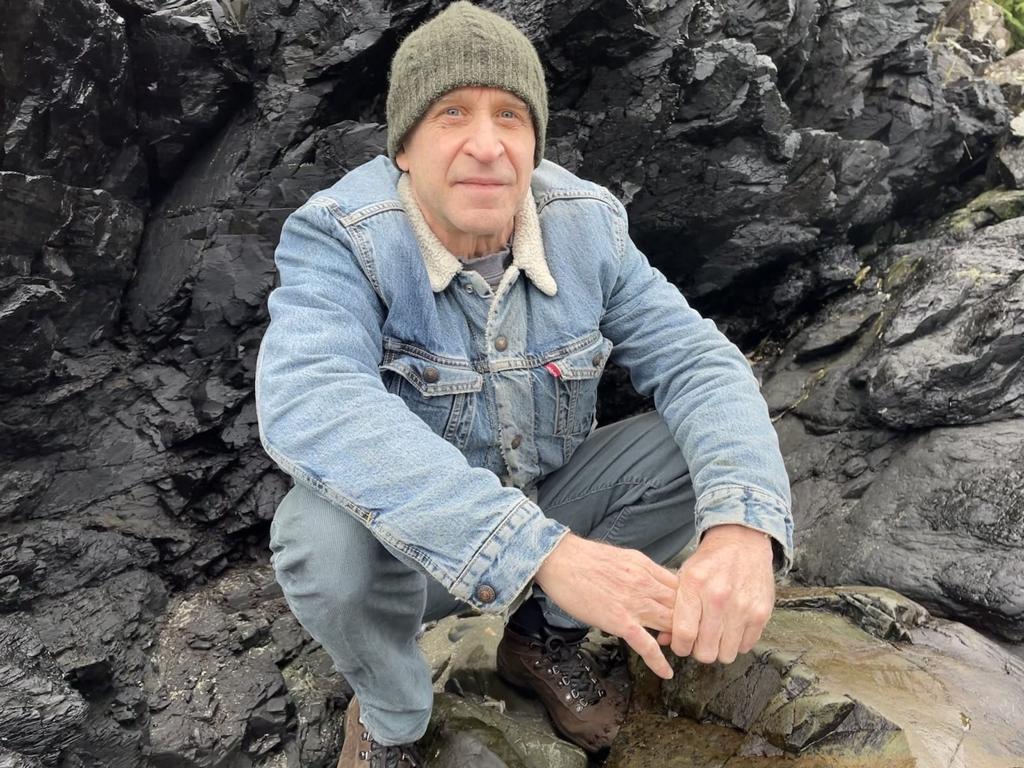

By Douglas Heselgrave
The first day of spring. The bees from our hive were buzzing around my head as I pulled out buttercups and planted arugula seeds. Morning dew burned off the grass and the sun rose above the Blue Spruce trees, throwing weaving shadows across the garden. A perfect Vancouver day, complete with construction noise and the echoing sounds of the crew’s Bhangra music wafting from across the lane. There are moments in life when you become aware that you don’t want anything else, that things are perfect the way they are. There was, as the Bible said, nothing else to add.
Or, so I thought, until the roofers arrived at my next door neighbour’s house. There was a moment of silence as the early construction workers left as a gang of sooty labourers hauled out rolls of tarp and set up their ladders. Before they got down to work, one of the youngest roofers pulled a battered ghetto blaster from out of the back of their truck and perched it on the tailgate.
I looked up. Waiting. If you’ve ever worked on a construction site or lived in an area that’s experiencing a lot of urban renewal, you know this moment. Anything can happen. I’d been lucky today so far. The Bhangra music was enjoyable, light and airy and was perfect for early morning planting and weeding. Things could very easily go downhill now, I thought. The worker lit a smoke and hit the play button. Time stopped for a minute as I prepared for the worst and was ready to head for the front yard, anticipating the end of my morning reverie. There was an audible click followed by a split second of silence before I heard the unmistakeable sound of Neil Young blaring out of the speakers. And, it wasn’t ‘Heart of Gold’ or ‘Rocking in the Free World.’ It was ‘Dreaming Man Live ’92.’ Shit! At least one of these roofers was a Neil Young fan. I exhaled, my shoulders aligned, my back relaxed and my shovelling fell into rhythm with the music.
Life is full of tiny moments of beauty, vignettes, sketches that you don’t appreciate until after they’ve passed. It’s not that listening to ‘Dreaming Man’, Neil’s solo live tour in support of ‘Harvest Moon’ was a great revelation; I’d heard it a hundred times before. What was so exceptional was how the music illuminated the surrounding environment without any intention. Everything was so perfectly aligned and connected, from the banging of the roofers, to the buzzing of the bees, to the wafting sounds of ‘One of These Days’ coming through the fence. It’s a moment that Lao Tse would have described as flowing with the tao. No tension, no friction. Described by Neil Young, interacting with the landscape, the smell of clematis, compost pungent in the air, the rattle of cars in the lane – for a brief moment, the universe vibrated with synergy and sense.

“Hank To Hendrix.” A gust of wind through the fence; something was happening that I didn’t want to miss. I stopped shovelling and sat on the stoop to watch the sun burn off the clouds as the Lions mountains came into view.
Canada geese flew through the sky. The air tasted good, the music was more beautiful for the freshness of the breeze, and as I inhaled again, I intuited, started to consider that music is always, inevitably, a product of where it comes from. It’s part of the protoplasm, of the binding chords of the ecosystem, the sonic spiderweb that knits the disparate phylums of biology, environment and culture together. My backyard in East Vancouver is a long way from the rural Ontario or prairie towns of Neil Young’s youth, but still, there was something so ineffably right, so undeniably Canadian about his music. I’d never really realized it or consciously conceived of it, but Neil Young sounds like Canada. His music sounds better here than it does anywhere else and nowhere better than in the outdoors.
I have too many memories to mention. Hearing ‘Walk On’ while camping during a hailstorm on New Year’s Day 1984 in Tofino, British Columbia, winding up the highway to Whistler in 1989 and listening to ‘Freedom’ for the first time are a few that come to mind. I can distinctly remember the first time I was aware of Neil Young. It was in Osoyoos, sometime in the summer of 1972. I can still remember the feeling of dryness, dust cracking in the back of my throat as I looked through a gas station comic book rack for the newest issue of Tarzan comics. ‘Heart Of Gold’ was playing from the transistor radio at the cash register. Times like this, you don’t just hear Neil Young’s music – you smell and taste it, too. It’s a complete experience. If that sounds just too whacky for you, let me try to explain what I am getting at with a comparison.
I still love Bob Marley’s music and have felt a crucial connection with his songs and lyrics ever since I first heard him as a teenager in 1978. He was one of my earliest inspirations, and when I listened to him sing, I felt that his words echoed, and gave form to the ideas that were residing in my soul like no one ever had. I felt that ‘Bob’ was mine. But, over the years, I’ve had to admit that even the squarest Jamaican person I’ve ever met ‘gets’ Bob Marley and his music in a certain way that I’ll never even get close to. There’s something about shared experiences that crosses boundaries and knits people together through a shared sense of place.
Neil Young has that effect on Canadians, and the relationship we all have with him and his music is special and unique. Love him, or hate him, he’s part of our fabric, and carries our dust, soil, rain and weather with him wherever he goes. It’s ineffable and indelible.

Don’t get me wrong, I’m glad that people all over the world love Neil Young’s music and that the people of Europe are happy and excited for his upcoming summer tour. After seeing him in Vancouver last October, I can honestly say that he’s never played better than he does now. And, I don’t begrudge America for seducing him away. Neil Young – and Joni Mitchell and Leonard Cohen – have often reminded us that there was no Canadian music business to speak of when they were first starting out, and that they had no choice but to go south to pursue their careers. So, it has to be admitted that because he’s lived in California long enough to record albums like ‘On the Beach’ and been on the road through America enough times to write ‘Ramada Inn’ in a way that’s real, America has seeped deeply into Young’s consciousness. Still, no matter how long he’s spent south of the border, he’s always somehow viewed things and reported back from a Canadian perspective.
It’s a perspective that you only get if you grew up in a land as vast and full of potential as America is,
but without the manifest destiny and the obligation of being leaders of the free world weighing you down. It’s something that’s very obvious when you read Young’s books, but it’s right there in his music as well. Neil Young’s music isn’t ‘so Canadian’ because he’s written songs about towns in North Ontario or that name check Winnipeg or iconic Toronto folk clubs; it’s much more subtle than that. It has more to do with the way the characters in his songs interpret and report about the world around them. The way they see, hear, ruminate, and decide whether to let go or walk on is what’s so Canadian. It’s hard to pinpoint exact words or compose a lexicon to prove this; it’s something that’s – ‘bred in the bone’ as another great Northerner, Robertson Davies once said.
Maybe, it’s because I’m ‘so Canadian’ that I understand that there are things that you can’t necessarily talk about, but that you just have to agree to ‘feel.’ A song like ‘Daddy Went Walking’ resonates with this.
‘Corduroy pants and an old plaid shirt;
Daddy went a walkin’ just to feel the earth….
Old man crossing the road/You’ve got to let him go.
Old Man’s crossing the road, He’s feelin’ fine.’
These are not lyrics that are likely to win a Nobel Prize any time soon, for like a lot of the gestures described in Neil Young’s songs, taken in isolation, they’re not a big deal. But, if you open yourself up, there’s something suggested, captured, but not held on too tight a tether, that suggests that everything you need to know is there in the song as it is. But, still it’s no big deal. Maybe, that’s a dichotomy you have to be Canadian to get. There’s no bluster, the ego is rendered small; there’s as much communicated by the shuffle of a foot or the tilt of a hat as by the grand statements of a less confident, integrated singer. There’s no assertion of ‘this is how it is,’ but rather of ‘this is how it is for me; I hope the way you see it is interesting for you.’
When your history has shown you that you can build a railroad without killing all the buffalo, and that once you’ve built the trains you don’t still have to defend them from the red people you pissed off so much for killing those buffalo, your sight and hearing develop differently. It’s easier to hear the prairie wind when you’re not weighed down by religious prerogative, pilgrim’s pride and Manifest Destiny; when it’s not necessary to always press your ear to the ground and listen for danger. It’s not that Canadian life back in the day wasn’t rife with physical and psychological dangers; our music and literature is full of fear and yearning. Nothing America’s created this side of Hank Williams has ever touched Sinclair Ross’ short story ‘The Painted Door’ for its portrait of the pure soul destroying loneliness that comes when you realize just how big the space around you is.
Canada was a country that compelled people to break through the bush, canoe and portage in as straight a line as possible from west to east. People gave up and settled in the middle. Prairie towns built of equal parts of optimism and resignation. It took fear of the Americans moving north during the gold rush to get the Canadian government to build a railway across the country, but mostly ours is a history of people who want more to protect than to expand, with the hope not of great wealth, but just being a little better off than your parents and grandparents were.
There’s no mystery, for example, why Neil Young is against Monsanto and loves the farmer and the wide open spaces. Canadians don’t want to steal your seed, but we sure as heck don’t want anyone stealing ours. If you leave us alone, all we want is an honest day’s pay for an honest day’s work.
It’s hard to remember at this late date, but when Neil Young’s ancestors – and the European side of my family – came to Canada, your life had to be pretty poor at home to venture this far. Canada was a rough place,with lots of cold, wind, and regretful lonely ghosts who’d remind you that every minute in this country was filled with risk and disappointment. Danger. Not from arrows or a white boat coming up the river, but from something more primal, inarticulate and dark. In the Canadian psyche, if you’ve been here long enough, you can feel the pulse of nature, the stories in the rustling leaves, the breath of danger. It’s seeped in, rests so far in the background, the substratum, that it’s not necessary to articulate, so mostly we’re quiet about it. It’s an approach to life and perception, a style of phrasing that Neil Young has taken in so deeply that it’s become just as identifiable as the ‘one drop’ in Bob Marley’s songs. You can hear it like the ‘Beautiful Bluebird’ or the ‘Prairie Wind’ in the echo, the hollow in the split second between Neil Young’s in-breath and the delivery of the lyric or the pause before the guitar solo kicks in. It’s in that brief silence in his timing that I intuit the essence of what’s really so Canadian about Neil Young. I’m not trying to be obtuse. Maybe, it’s just one of those things you feel and really can’t put into words. It’s probably one of those things you get or you don’t.
So, if you’re reading this and getting pissed off and wondering if what I’m saying is that the most Canadian thing about Neil Young’s music are the parts you can’t hear, I’d have to say, ‘yes.’
Sorry.
It’s kind of like when you first hear Neil play electric feedback on one of his records and wonder what he’s on about. Then, when you go to one of his concerts and see how he shuffles and lurches before dropping into a solo, it all finally makes sense.
Yeah, it’s like that.
Some of you will know what I mean.
About Doug:
Doug grew up in Canada and began his writing career at the Vancouver Sun. He then moved to Hong Kong where he taught and wrote for the South China Morning Post. He returned to Vancouver where he worked with new refugees coming to Canada and began writing full time for The Vancouver Sun, The Georgia Straight and more. He’s now retired but continues to write about music.