By NYA Staff
The federal government’s treatment of America’s wild horses is creating a growing controversy over whether the Bureau of Land Management (BLM), the agency responsible for protecting the animals, is effectively enabling their slaughter.
The story, first reported in the N.Y. Times (here)) centers on 68 wild mustangs that once roamed freely in the Western mountains. The horses were captured by the federal government and held for years in an Idaho facility as officials sought permanent homes for them. In March, they were transported 1,800 miles to Ohio and sold for just $25 each to livestock trader Brandon Jones. The following night, two cattle trucks arrived and removed the horses. They were never publicly auctioned, and their ultimate destination remains unknown. Animal advocates suspect they were sent into the slaughter pipeline.
An examination of government records found that the BLM has sharply increased its sales of wild horses to private buyers. In 2025, the agency sold more than 3,700 horses, more than double the previous year’s total. About 500 of those went to Jones, who has become the agency’s biggest buyer despite having no established history with wild horses or a sanctuary.
The potential financial incentive is enormous. The government can spend more than $3,000 capturing and preparing a mustang for sale yet sell the animal for as little as $25. A horse can ultimately bring as much as $750 at a slaughter plant. Because the United States has no horse slaughter facilities, horses destined for slaughter are generally exported to Canada or Mexico.
The BLM insists it does not send horses to slaughter. But the system contains a loophole. Horses that fail to attract adopters after repeated online listings can be designated “unadoptable” and sold. Buyers must promise not to slaughter them or knowingly sell them to someone intending to do so. But a subsequent buyer who purchases the horse from a middleman is not bound by that original government contract and can legally sell the animal to a slaughter buyer.
Records collected by wild-horse advocates suggest that this is happening. At least 55 mustangs sold at one Oklahoma event were later found at livestock auctions in Kansas and Texas frequented by slaughter buyers. Advocates say they have documented more than 250 horses that were purchased from the government and quickly resold during the past year. Many were remarkably young, with an average age of about five years and some only two or three years old.
There is also evidence connecting horses sold to Jones with the Canadian slaughter trade. Government-branded mustangs appeared in trailers exported to Canada after Jones received large shipments. Jones denies selling horses for slaughter and says he sells them to individual farmers and horse owners. He has declined to provide records showing where hundreds of his horses went.
The underlying problem is the enormous size and cost of the federal wild-horse program. About 73,000 wild horses live on Western public lands, while another 58,000 are in government holding facilities. The holding system costs approximately $100 million annually and consumes most of the BLM’s $142 million wild-horse budget.
Alternatives exist. The BLM has access to fertility-control drugs that can reduce wild-horse populations without removing animals from the range, and government experts have repeatedly recommended broader use. But advocates argue that the agency has become trapped in an expensive cycle of capturing horses, warehousing them and then finding increasingly questionable ways to get them off its books.
The result, critics say, is a system in which the government publicly promises to protect wild horses while its own sales practices may be funneling some of America’s iconic mustangs toward slaughter.
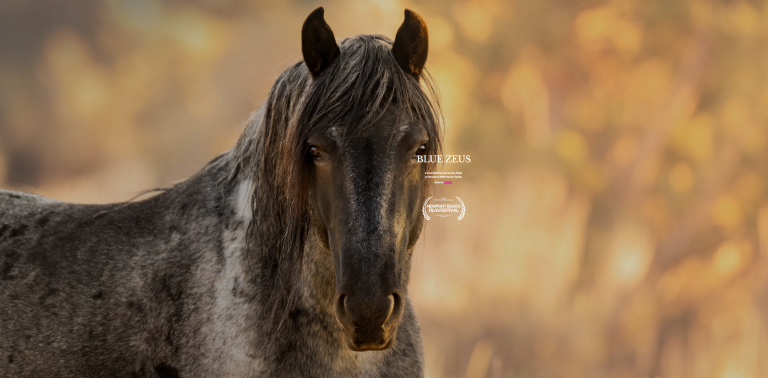
Learn more about wild horses and their lives in the documentary Blue Zeus. It is a true story of a wild American mustang who lost his family and freedom, and the brave woman who refused to let that be the end of his story. It exposes government corruption and cruelty, the ongoing fight over our public lands, repeated failures in animal welfare and a growing movement determined to protect America’s last remaining wild horses.