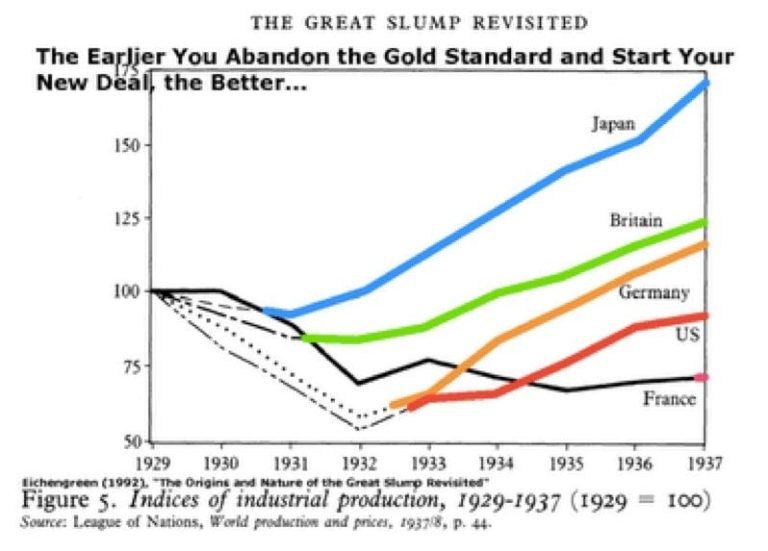
In the election of 1920, Americans handed a landslide victory to the Republicans and their presidential candidate Warren G. Harding, giving them control of both Congress and the White House. After the moralizing of the Progressive Era and the horrors of World War I and the Spanish flu epidemic …
Despite Trump’s statement yesterday that billionaire Elon Musk had removed the restrictions from Starlink and Starshield that are crippling Ukraine’s ability to protect itself from Russia, Ukraine president Volodymyr Zelensky said today the restrictions continue.
Despite Trump’s statement yesterday that billionaire Elon Musk had removed the restrictions from Starlink and Starshield that are crippling Ukraine’s ability to protect itself from Russia, Ukraine president Volodymyr Zelensky said today the …
Lots of people worked long and hard to try to make sure all Americans could vote. Today is the anniversary of just one of those efforts: the 1915 New York City Women’s March.
—
Notes:
You can find Liza Donnelly at her Substack: Seeing Things.
Alexander Ward and Lara Seligman of the Wall Street Journal reported today that Trump called Elon Musk yesterday to ask him to stop throttling Starlink’s military-grade communications system, Starshield, in Ukraine.
Alexander Ward and Lara Seligman of the Wall Street Journal reported today that Trump called Elon Musk yesterday to ask him to stop throttling Starlink’s military-grade communications system, Starshield, in Ukraine. Slowing down the system degrades Ukraine’s …
In which I try to answer your questions about modern politics....
In today’s Politics Chat: Trump said he asked Elon Musk to lift restrictions on Starlink and Starshield, the communications networks Ukraine relies on to fight off Russia. The slowdown of those networks during a massive Russian barrage left Ukraine unable to defend against incoming drones and …
Everything feels out of whack in the United States.
First of all, the president’s behavior is becoming more and more erratic. Earlier this week, he walked past the open door of his armored car, known as “The Beast” and wandered toward an open field before Secret Service agents redirected him.
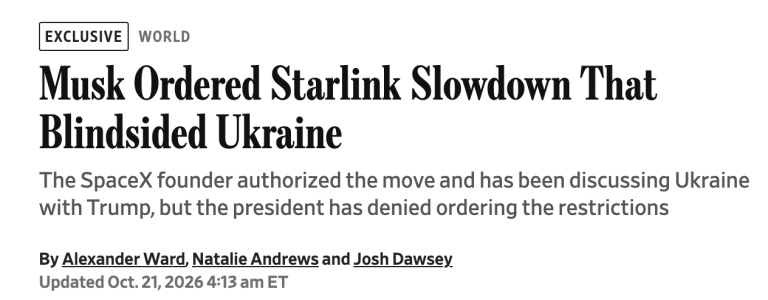
A blockbuster story in the Wall Street Journal tonight by Alexander Ward, Natalie Andrews, and Josh Dawsey says that it was billionaire Elon Musk who ordered Space X to slow down its service in Ukraine, rendering some drones that stopped incoming missiles and others aimed at Russian targets useless.
Tonight Lingling Wei, Alex Leary, Thomas Grove, and Josh Dawsey of the Wall Street Journal reported that Russia’s president Vladimir Putin has proposed a meeting next month with Trump and China’s president Xi Jinping to decide the fate of Ukraine.
Tonight Lingling Wei, Alex Leary, Thomas Grove, and Josh Dawsey of the Wall Street Journal reported that Russia’s president Vladimir Putin has proposed a meeting next month with …
Around the United States of America and the world, people gathered today at more than 3,000 No Kings: Vote Early events to encourage Americans to vote in the November 3 midterm elections.
Around the United States of America and the world, people gathered today at more than 3,000 No Kings: Vote Early events to encourage Americans to vote in the November 3 midterm elections. The events were designed …
Secreted away inside a windowless building at 7700 Potranco Road in San Antonio, Texas, is a darkened room that serves as the hub of Task Force Raider. This military task force is secretly at work as part of a government-wide “election security group,” guarding against “interference” in the upcoming midterm elections.
Interference, however, is a loaded word. While it connotes the Kremlin hacking into polling places or changing the election count, Task Force Raider is actually more focused on the broader category of “influence”, specifically Russian or Chinese attempts to change minds rather than to change votes.
But the real target is the American people, whom the federal government sees as vectors for foreign influence.
“The entire election security scare is to indulge President Trump and assuage Democrats, all of whom fear interference and shenanigans, but not from foreign shores,” says a senior military intelligence officer, who spoke to me about the secret effort.
Trump’s new pick for White House press secretary lasted less than five days. Katie Zacharia resigned today after a series of disastrous performances and news that she had misrepresented her legal credentials. Trump said he would let her decide if she wanted to stay but added that if he were in her shoes, he would …
Paul Krugman is a Nobel laureate economist and formerly columnist for The New York Times. He offers commentary on macroeconomics, healthcare policy, and politics.
At some point in the not-too-distant future, the U.S. economy will experience a slump that is severe, protracted, or both.
How do we know this? Because as the bumper stickers don’t quite say, stuff happens. Twice in my lifetime — during the long boom of the 1960s and again during the so-called Great Moderation from the mid-1980s through the 1990s — some economists have dared to proclaim that major recessions were a thing of the past. Each time events made such proclamations look foolish.
Thus it’s safe to assume that sooner or later the economy will deteriorate and perform badly. And despite wild assertions by Donald Trump and his minions that we’re in an economic Golden Age, there are troubling aspects of the current economy that could potentially be harbingers of the crisis to come. Here is my list:
· Inflation has been persistently elevated and the Fed could be forced to significantly raise short-term interest rates.
· The immense AI boom could easily turn out be a bubble.
· Long-term government bond yields have been rising, and there are rumbles about the possibility of a debt crisis.
I had a revelatory conversation back in April with Lisa Graves, about the dire state of the Supreme Court and how it got that way. No time for a fresh interview this week, but here she is at the Brattleboro Literary Festival:
Billionaires should not be making decisions critical to national security. That’s straightforward. And the case of Elon Musk and his attempt to undermine Ukraine makes that clearer than ever. Recent events, that is in the past 24 hours, really don’t change that point. If anything, they reinforce it.
Hi, Paul Krugman.
Yesterday, I wrote that Starlink’s control must be taken away from Elon Musk.The occasion was that Musk abruptly and without warning downgraded the effectiveness of Starshield, which is a sort of high velocity, high frequency version of Starlink that has been playing an essential role in Ukraine’s defense.
Suddenly, the speeds of communication were capped, which is devastating for Ukraine. Exactly how that happened? The Wall Street Journal reported that Musk made the decision or gave the order. Musk said that, oh, that’s under the White House’s control. The White House said, no, it was just him.
In fact, none of the parties to all of this are credible. None of them are reliable narrators. And it doesn’t really matter. The point is that this is a gray zone situation. That should not exist, that it should be very clear that if national security is at stake, which it is — this is a war in which US technology is playing a critical role — that unambiguously, this should be under the control of publicly elected officials, the president and Congress, not some guy who happens to have a lot of money. But it is not.
We have private property, but we are a democracy. And critical decisions for the national interest should be made by democratically elected leaders.
Did Elon Musk decide by personal fiat to cut off Ukraine’s access to vital communications? Although Musk claims that the decision was made by Trump, according to the Wall Street Journal, some U.S. officials state that Musk did indeed take it upon himself to pull the plug on Ukraine. Secretary of State Marco Rubio is quoted as saying that the administration was blind-sided: “There was no foreknowledge.”
Now, perhaps Donald Trump told him to do it, sotto voce, Mafia-style: (“This Zelenskyy guy is a problem. Someone should do something about it.”) And Trump could demand, but hasn’t, that Musk restore Ukraine’s access.
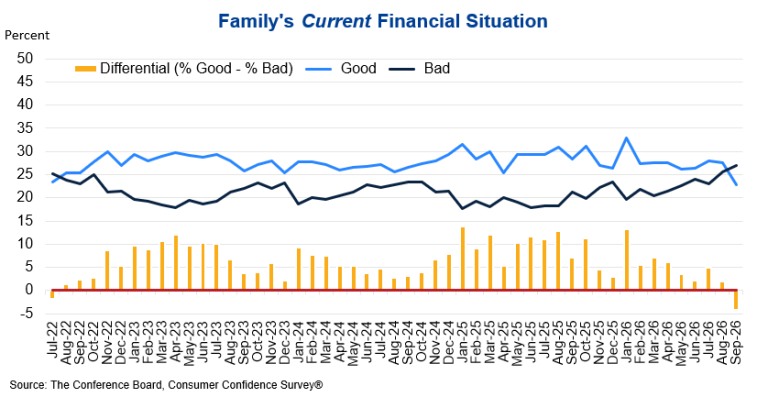
On the eve of the midterm election, American families are feeling financially stressed As the chart above shows, the percentage of families who say that their financial situation is good has plunged. For the first time since the post-Covid inflation of 2022, it has fallen below the percentage who say that their financial situation is bad.
Rising prices are the obvious explanation for this stress. And while presidents usually have much less influence on the economy than is generally recognized, the current outbreak of high inflation is all on Donald Trump. He began this with two wars of choice: one, a trade war with his destructive tariffs, and then an unwinnable military war in the most important energy transit point in the world.
There is, however, a third factor behind Americans’ anger, and it isn’t getting nearly as much attention as it should. There has been a catastrophic decline in health insurance coverage combined with sharply rising premiums for many of those who have managed to hang on to their coverage. And this, too, is all on Trump.
Here’s what happened: Trump and his congressional minions refused to renew the expanded subsidies that had made health insurance affordable for millions of Americans during the Biden years. At the same time the One Big Beautiful Bill imposed punitive work requirements that made it far more difficult for families to obtain Medicaid coverage.
Writing in the New York Times, David Sanger highlights the extent to which Donald Trump is going all out to support Vladimir Putin’s war of aggression in Ukraine:
President Trump’s intensifying effort in the past few weeks to rehabilitate Russia and usher President Vladimir V. Putin back into diplomatic society is remarkable for its speed, its characterization of Mr. Zelensky as the primary obstacle to peace, and its brazen denial that Russia is continuing the war that Mr. Trump says he is trying to end.
“Russia, frankly, has been fine on Ukraine,” Mr. Trump said on Monday, speaking to reporters outside the White House as he left for a campaign rally. “They haven’t been doing much,” he said, making no mention of the Russian missiles and jet-powered drones that have been targeting apartment buildings in Kyiv and Ukraine’s surviving electricity grid.
In contrast, he said, “We’ve given a lot to Ukraine. They’ve given nothing to us. Remember that.”
As Sanger notes, Trump’s support for Putin is unique in American history. Previous administrations have made deals with erstwhile adversaries, as Nixon did with China, and given up on support for failing allies, as the U.S. did in Vietnam and Afghanistan. But never before have we outright switched sides, let alone supported an aggressor while vilifying that aggressor’s victim.
What makes Trump’s support for Putin even more remarkable is that Russia has, by many accounts, been actively aiding Iran against America in the war Trump started. Who says so? Well, among others, Dan Caine, chairman of the Joint Chiefs of Staff. And the aid goes beyond intelligence sharing that has helped Iran target U.S. forces. Russia has also reportedly been sending Iran explosives and weapons components.
According to CNN, all-out war with Iran may be about to resume:
The US military has developed new strike plans that include potentially using the so-called “mother of all bombs” to target Iranian energy infrastructure and nuclear sites should President Donald Trump give the order to resume combat operations either before or after the midterm elections, according to multiple US officials familiar with the matter.
Trump says that he won’t order a strike before the midterms. But Robert Pape, author of the Substack Escalation Trap, argues that we shouldn’t believe him — that the bombs may well drop before the midterms. And while I am not a strategic expert, I believe that Pape may well be right, because his analysis of Trump’s political position is something I recognize from financial economics.
You see, it’s a well-understood proposition that the owners of businesses that are on the verge of going bust often engage in destructive behavior. And Trump is about to go bankrupt — not financially (he’s made billions through corruption) but politically. So he, like a failing businessman, has strong incentives to wreak havoc.
Pape’s argument is basically a version of the phenomenon — a particular form of moral hazard — often called “gambling for resurrection.” When a company is on the edge of failure, it makes sense for the company’s owner to make highly speculative, even crazy investments that are highly likely to fail but might, just might, make enough money to pull the company back from the brink. After all, for the owner it’s heads he wins, tails his creditors lose.
As I documented in my last primer, AI-related capital expenditure is now dramatically crowding out investment in almost every other sector of economy – especially housing construction and manufacturing. Furthermore, data centers are incredibly capital-intensive: that is, they deploy vast amounts of capital while employing very few people. A given amount of capital employs far more workers when used to construct a factory, an office building or even a distribution center. So when investment is diverted away from other sectors to AI, the overall demand for labor falls relative to what it would have been before the shift. Hence, the AI boom will depress the demand for labor in the economy.
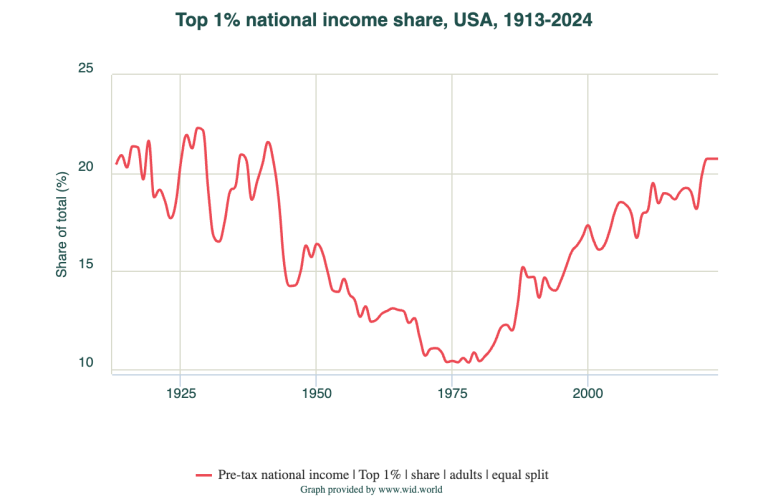
Despite the recent panicked claims that AI will wipe out millions of jobs, the shift towards AI probably won’t lead to mass unemployment. However, it will lead to slower growth in wages. Conceivably, it could even lead to falling real wages. Moreover, this will happen in an economy that, for 25 years, has increasingly rewarded wealth rather than work. Even before the AI boom, the share of national income going to workers was falling rapidly. Thanks to AI, it is now on track to decline even faster.
If this sounds like a problem, that’s because it is. Yet it’s important to understand the nature of the problem. A crude Marxist might see the issue as simply one of competing classes — capitalists versus workers — and oppose anything that shifts the balance away from labor toward capital. And to be fair, there is something to be said for that view. Redistribution of income from labor to capital definitely leads to increased economic inequality and, potentially, challenges to democracy and social unrest.
Multiple polls show Trump’s approval at record lows, but I think what’s happening runs deeper than this. Something very dramatic is occurring.
Many people who consider themselves non-political or independent — or moderate Republican or who even voted for Trump in November 2024 — can’t avoid seeing what’s come so clearly into the open. And they’re finding it disgusting and terrifying.
They’ve watched Trump order the National Guard into cities over the objections of mayors and governors. They’ve watched Trump’s ICE agents drag people out of their beds in the middle of the night, zip-tie them and their children, and haul them away.
They’re watching the Justice Department argue that if the Democrat wins in Alaska’s Senate race, she shouldn’t be certified. They’re seeing Trump threaten to revoke the citizenship of Representative Ilhan Omar.
They see Trump direct the IRS, FBI, and Justice Department against liberal groups that oppose him. They’ve watched him push broadcasters to take off the air comedians who criticize him — Stephen Colbert, Jimmy Kimmel. They’ve watched him establish immunity from IRS investigations of himself and his family.
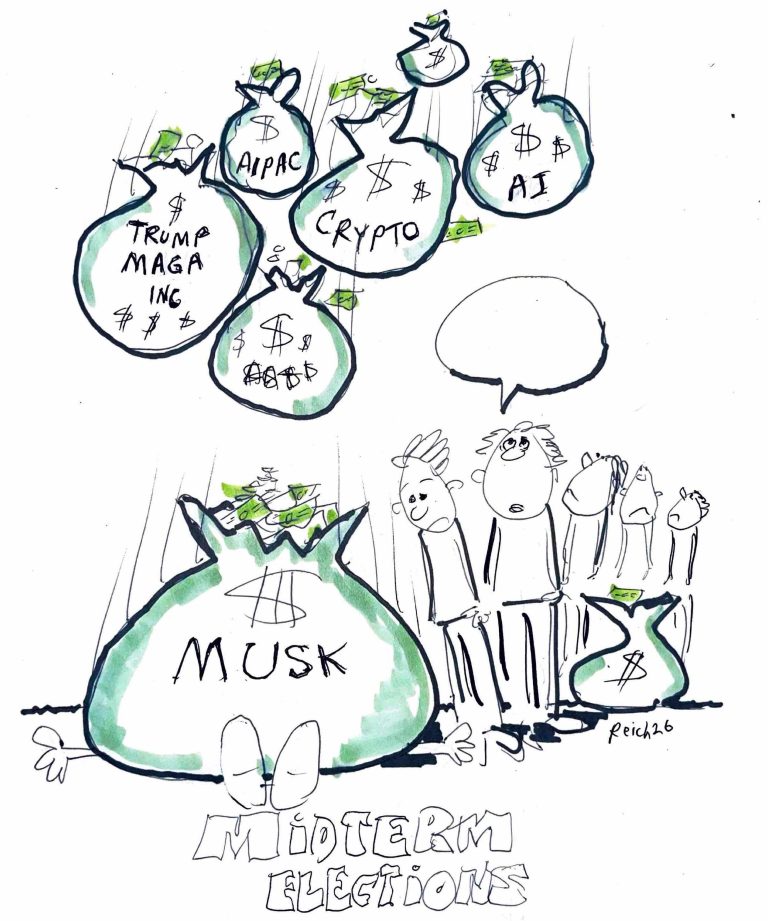
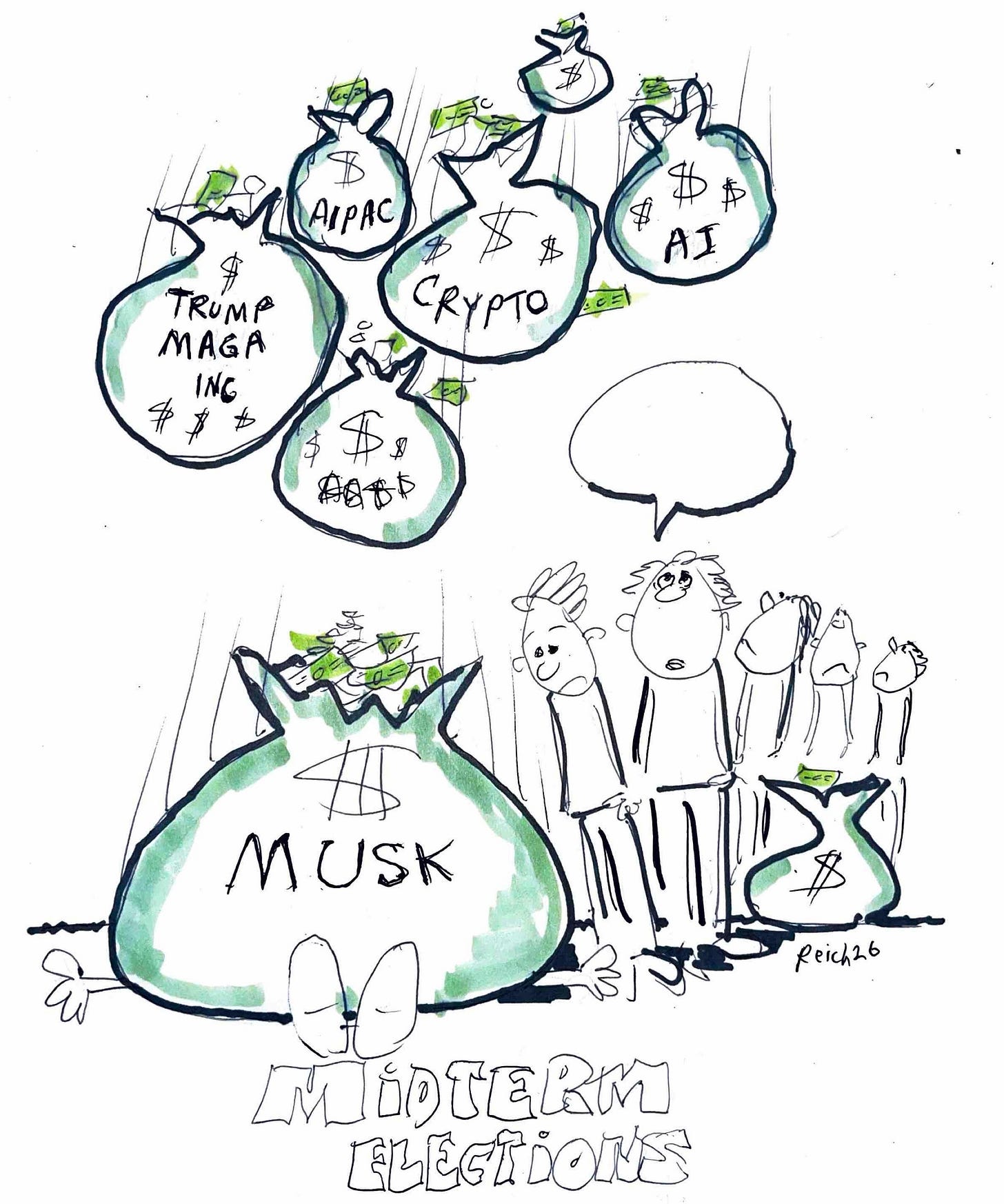
Ten days away from the midterms, the two most vile people in the United States (in the world?) — Elon Musk and Donald Trump — are plotting how to take over the elections. Musk is pouring hundreds of millions of dollars into Republican races and Trump is using the Justice Department to try to decertify Democratic wins even before they occur.
But as Heather and I explain, they won’t succeed.
Please pull up a chair, grab a cuppa, and join in the conversation.
Sorry to intrude on your inbox again today, but Trump’s attempt to overturn any results of the 2026 election he dislikes took a sharp turn toward authoritarianism when the Justice Department today asked a federal court to block certification of the Senate election in Alaska if the Republican incumbent narrowly loses.
The Department argues that confusion over a candidate on the ballot with a name very similar to that of the incumbent, Senator Dan S. Sullivan, could taint the election result.
Republicans are relying on this billionaire’s money to win the midterms — and hoping you don’t notice.
Elon Musk has quietly spent $445 million for Republicans so far in this year’s midterm elections.
He’s spent the most money so far in the Texas Senate race, boosting Republican Ken Paxton and attacking Democrat James Talarico. He’s also spending millions for the Republican Senate candidates in Ohio and Michigan, and in more than 30 competitive House races. The spending is happening through his “America PAC.”
But while Republicans accept Musk’s money, they’re hoping no one notices. Party operatives behind the scenes reportedly want to maintain some distance from him.
Despite his unpopularity, Republicans are still eager to take his money. And he’s still eager to give it to them.
That’s because Musk needs Republicans just as much as Republicans need him.
After helping deliver the presidency and Congress to them two years ago, Musk has reaped a massive return on his investment through government contracts, tax cuts, and deregulation.
Republicans can try to downplay their dependence on Elon Musk in the midterms, but we know the truth.
And if Republicans maintain control of Congress, they’ll continue to sell out our country to billionaires like him.
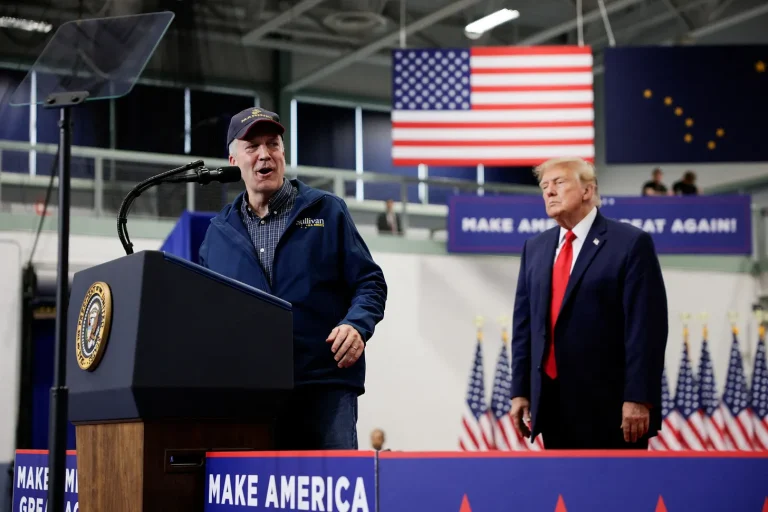
Republican Senate candidate and incumbent US Senator Dan Sullivan reacts as US President Donald Trump speaks at the Curtis D. Menard Memorial Sports Center in Wasilla, Alaska, US, October 13, 2026. REUTERS/Evan Vucci
In a new lawsuit, the Trump regime is laying the groundwork to challenge a Democratic victory in Alaska, reviving concerns about Trump's efforts to interfere with election certification.
With the midterm elections approaching, the Trump regime is already laying the legal groundwork to potentially block certification of a Democratic victory in one of the nation’s most closely contested Senate races.
Access this reporting and a copy of the lawsuit for …
A few weeks ago, when I asked you what you thought Trump’s promised “October surprise” would be, most of you predicted he’d interfere in the election.
My erstwhile Cabinet colleague Robert Rubin, who served as secretary of the treasury, agrees with you.
Rubin wrote in Wednesday’s New York Times that many Americans “underestimate” the threat presented by “Trump’s clearly expressed desire to interfere with and even usurp the midterm elections.”
Rubin worries that leaders in business and politics “don’t take Trump’s attacks on voting seriously” and therefore “markets are not pricing in what I consider a meaningful risk.”
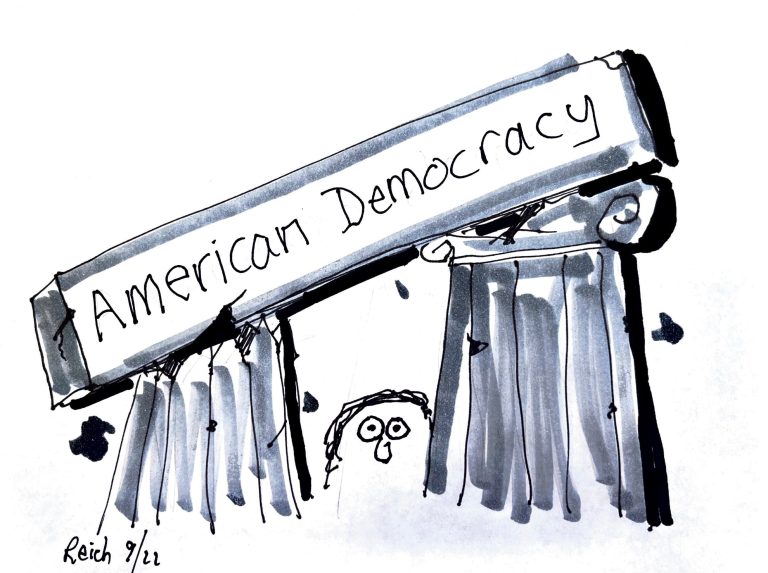
One of few silver linings of these dark Trump times is that much of what had been hidden has now been exposed.
I’m referring specifically to where the power lies in our system — power to decide how most Americans live and work. This exposure is having a huge effect on American attitudes. It may even lead to a fundamental political realignment along with major reforms.
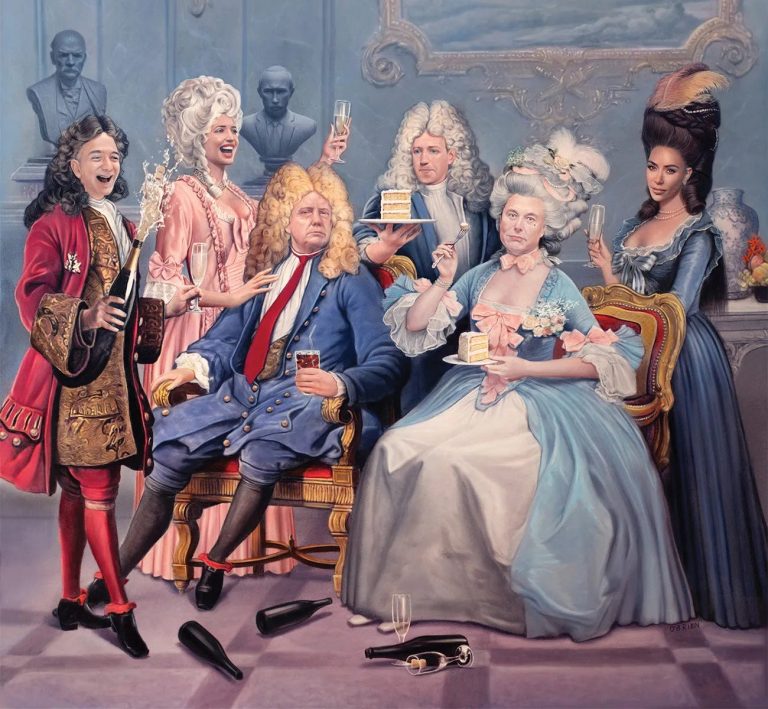
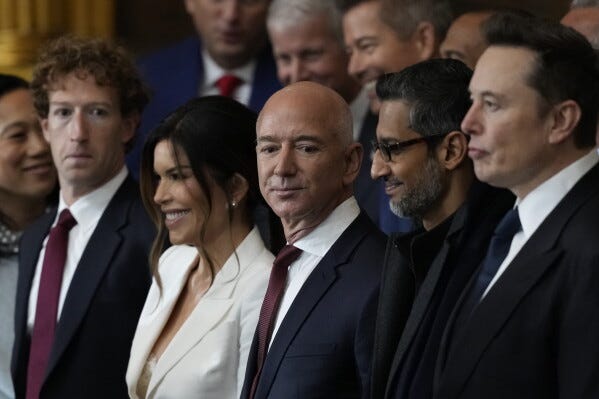
To summarize: America hates the billionaire barons of Big Tech.
Let me start with some historic context, then discuss how this affects the most pressing issues in the 2026 campaign, and finally suggest some likely outcomes.
We’re within two weeks of the midterms, and some people are sitting it out. They’ll probably vote, they tell me, but they’re not going to do anything more “active” because, they say, they “don’t do” politics.
Hey, I get it. I understand. I’ve been around politics for 60 years. It’s not pretty. In fact, “doing politics” feels a bit gritty and grimy, if not outright indecent. Who wants to “do politics?”
But let me explain why — if you happen to be one of these people — you might want to reconsider.
“Russia, frankly, has been fine on Ukraine,” Trump told reporters Monday. “They haven’t been doing much,” he said — ignoring the Russian missiles and drones that have been targeting Kyiv in one of the worst bombardments of the war. By contrast, Trump said, “We’ve given a lot to Ukraine. They’ve given nothing to us.”
In the last week, he or Musk (or both) have slowed or eliminated Ukraine’s access to Starlink satellite intelligence, leaving Ukraine without warning of Russian bombs. He’s pushed for Ukraine’s capitulation. He’s said Ukraine needs a “new president.”
Meanwhile, Trump has lifted sanctions on the sale of Russian oil on the global market. He has made a deal for the U.S. to buy Russian diesel. On Friday, Trump decided against imposing additional sanctions against Russia that Congress authorized in the Lindsey Graham Act, two days before the sanctions were to go into effect. Trump has also invited Putin to attend the G20 summit in Miami in December. And Trump has accepted Putin’s invitation to a three-way summit with Xi to decide Ukraine’s fate.
What are we to make of this? Why is he apparently selling out Ukraine? I’ve asked a number of Trump-watchers and Russian experts and grouped their responses below. Please choose the explanation that makes the most sense to you.
AI-enablers claim it will spawn a Star Trek-like utopia, where no one will have to work because technology can meet all of our needs. AI-skeptics warn of a Matrix-like dystopia, where machine-supremacy subjects humans to mass unemployment, even more rampant inequality, and environmental ruin.
The AI enablers want us to think we’re powerless, but we’re not. We must erect the following FIVE guardrails to protect humanity from AI:
AI Guardrail #1: Rein in data centers, starting with a total national pause on data center development until more regulations are in place. This is necessary AND popular. Over 70% of Americans oppose building AI data centers in their communities. A nationwide moratorium will buy us time while we figure out how to make data centers cover their own costs — both financial and environmental.
AI Guardrail #2: Block corporations from mass layoffs. We may not be able to stop all AI job losses, but we must have some guardrails in place to protect workers. We’ll need universal basic incomes and universal job guarantees to ensure that AI doesn’t leave people destitute.
AI Guardrail #3: Make the AI economy benefit everyone. One of the biggest threats from AI is that the wealth it generates will go exclusively to people like Elon Musk, but it doesn’t have to be that way. Every Alaskan, working or not, receives dividends from the state’s oil and mining proceeds. Why should an AI dividend for all Americans be harder to accept?
AI Guardrail #4: Label AI and stop abuses of our data. Deepfakes are a dangerous way in which our personal imagery and data can be abused with AI. We have to know what’s real and what isn’t — and we need federal laws to ensure the takedown of AI-generated content that uses someone’s likeness against their will.
AI Guardrail #5: New AI products must seek government approval. Tech billionaires will complain that this could stifle the “free market,” but that’s baloney. We don’t let corporations invent new types of nuclear weapons or new types of cocaine or new types of biological pathogens — or even new drugs without government approval that they’re safe and effective. We protect the public from certain kinds of innovation, and we should do the same with AI.
As humans, we can and must join together across party lines to demand these guardrails and ensure that the Big Tech oligarchs don’t drag us into a dystopia.
It is the only way for humanity to live long and prosper.
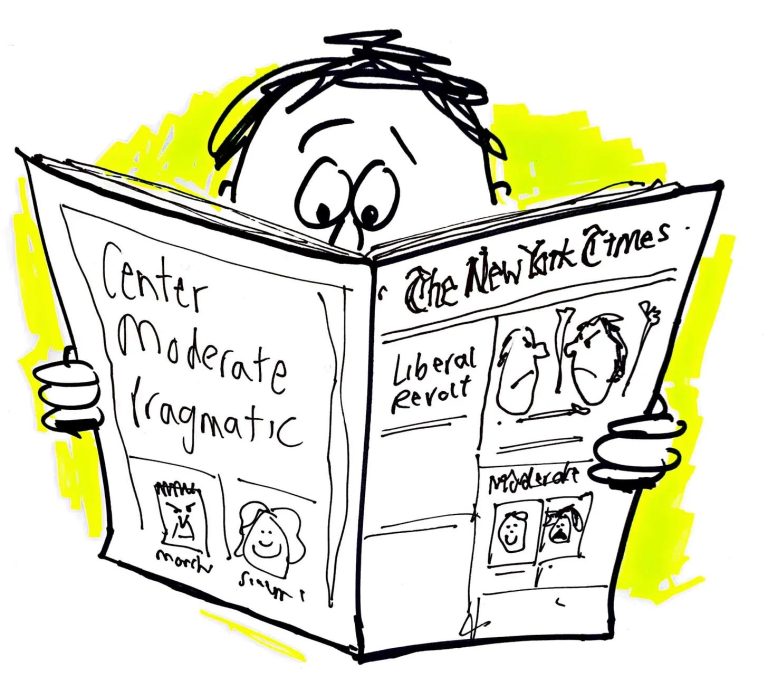
The venerable New York Times — the “gray lady” of American journalism that not only determines what’s news but sets the standard for how it should be reported — has been describing the upcoming midterms as if it were a competition between two equally passionate and roughly equivalent sides.
For example, in describing the recent debate between the two candidates vying to represent Michigan in the Senate, Republican Mike Rogers and Democrat Abdul El-Sayed, the Times offered its readers an analysis of social media feeds —“one curated for a left-wing audience and one for a right-wing audience.”
The Times did this by collecting more than 13,000 posts from X, and then — using a social media analytics company — categorizing the posts according to their apparent political leanings and whether they were “personal attacks and criticism” or concerned a particular issue area.
Then the Times presented it all in a vertical graph, starting with the beginning of the debate at the top and the end at the bottom, with responses to El-Sayed on the left side and responses to Rogers on the right.
What did the Times report that might be useful to its readers? It turned out that “viewers following the event on social media likely came away with two very different impressions, depending on their own political inclinations.”
Well, duh. People choose social media depending on their political inclinations to begin with.
Our fifth class begins our focus on power — and on the weakening power of workers and the increasing power of big corporations.
In case you missed them, here are the classes that have been released so far: Class 1, Class 2, Class 3, and Class 4.
For Class 5, just double-click on the video below, and you’re in the fifth week of class.
Background: It’s one of the oldest struggles inside the American economy and within capitalism worldwide: between labor and capital. And it has a direct effect on inequality.
Today we’ll look at antitrust laws designed to contain the market power of corporations, and labor laws designed to increase the market power of workers.
Both sets of laws have been altered over the last 40 years, contributing to a huge power shift. Corporations have gained greater market power, while the power of organized labor has been dramatically reduced. We’ll examine why these changes have occurred.
Questions:
What happened to antitrust in the United States over the last 50 years?
What happened to labor unions?
Why are antitrust (anti-monopoly) laws stronger in Europe than they are in the United States?
Why is a higher percent of European (and Canadian) workforces unionized than in the United States?
What’s the relationship among degrees of monopolization, levels of unionization, and inequality, and why?
A huge thanks to the Wealth and Poverty team — to Michael Lahanas-Calderón, Kyle Parker, Dan Davis, and Emmett Tjen — as well as Coro Fellows Ammar Ansari and Meagan Turner for preparing these course materials to be shared with all of you. And to Heather Kinlaw Lofthouse for making all this happen on this page.
This past week 4 of “Wealth and Poverty” focused on inequalities of place. If you haven’t had a chance to join, here’s a VERY short summary:
Reminder: Tomorrow we begin Week 5, when we’ll turn our focus to the giant “power shift” that began in the 1980s — weakening the power of workers and increasing the power of big corporations.
Week 5 will be released tomorrow at 2 pm PT, 5 pm ET.
In case you missed them, here are the classes that have been released so far: Class 1, Class 2, Class 3, and Class 4.
It’s not really a choice between two parties. After all, a record 45 percent of American voters now call themselves “independent” and don’t align with either party. And most of us who still describe ourselves as Republicans or Democrats don’t have much love for whichever party we’re registered with.
Nor will it be a choice between the “left” and the “right,” as those terms have been used for the last half-century — representing preferences by the left for more and bigger social safety nets and by the right for lower taxes. These days, big business wants more government in the form of subsidies, bailouts, no-bid government contracts, and a giant military-technology state.


 Heather Cox-Richardson