Out on the Trans-Canada Highway, 19-year-old Neil Young left Thunder Bay, driving his pride and joy, a 1948 Buick Roadmaster hearse he affectionately named Mort. In the back of the hearse rode four buddies, amplifiers, guitars, other belongings, and a motorbike. Neil’s method to save on gas was to shift into neutral at the top of a hill, then grind into third at the bottom, which strained poor Mort’s transmission. The highway heading east from Thunder Bay is virtually all hills.
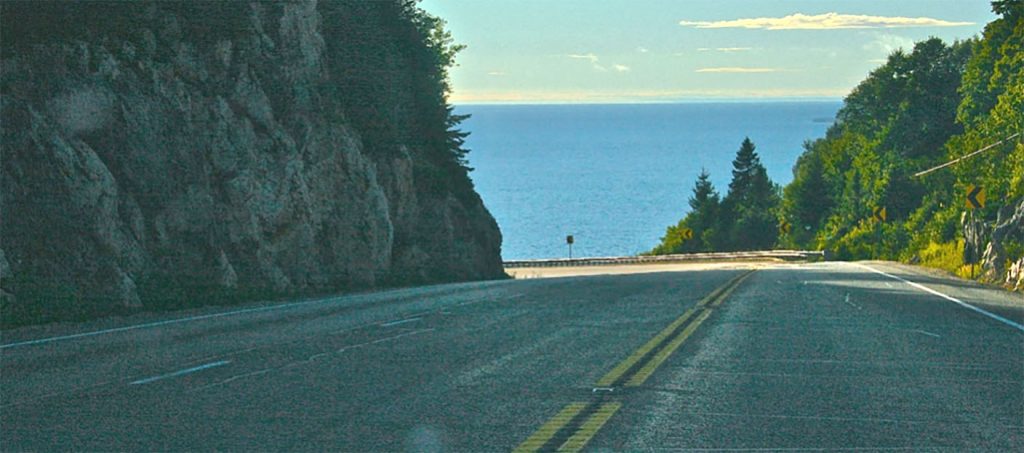
The Trans-Canada Highway east of Thunder Bay
East of Sault Ste. Marie, Ontario, just outside of Iron Bridge, at the bottom of a long decline, Mort had had enough. With a bang, the hearse’s smoking transmission fell out onto the highway, scraping and sparking. The shock caused rollicking hysterics among the crew, but it grew to concern in the next few days as they waited for the verdict on Mort from Bill’s Garage in Blind River. Mort was beyond repair and was abandoned there. Neil returned to Blind River only to sadly send his mother in Winnipeg a postcard to cancel Mort’s insurance.
In 1974, Neil recorded a song that encapsulated the event: Long May You Run. Fast forward to 2010. As snowflakes fell in Vancouver, British Columbia, Neil Young stood solo on the gigantic stage at the closing ceremonies of the Winter Olympics, representing his country. With his acoustic guitar and harmonica as his only instruments, Neil sang Long May You Run to the world.
Whenever I am out there on the Trans-Canada Highway and I hit the bottom of the long decline outside of Iron Bridge, my reaction is to smile. I think there should be a monument there honoring Mort and that timeless song.
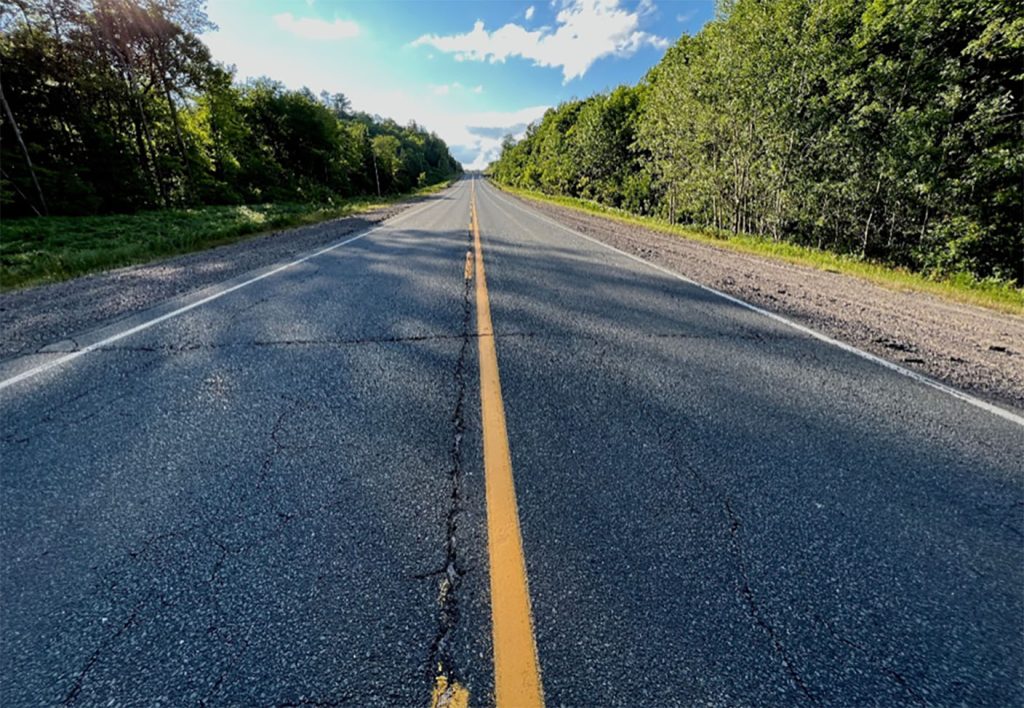
The long decline outside of Iron Bridge

Lloyd Walton