
By David Gelles
International collaboration on climate change is fraying. The Trump administration withdrew the United States from the Paris Agreement, the 2015 treaty aiming to limit global warming, and has penalized the renewable-energy business and promoted fossil fuels. Ten years after Paris, a vast majority of countries are not on pace to meet their climate targets. With the United States sidelined and China ascendant as a clean-energy superpower, the global map of alliances on climate action is being redrawn. On top of all this, the planet keeps warming.
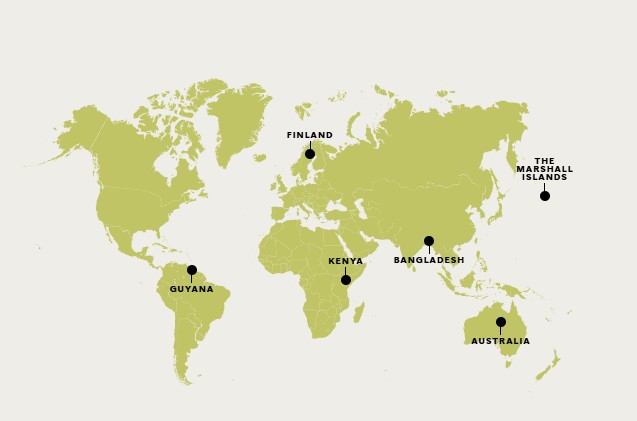
Debates around climate change often focus on the world’s largest economies and biggest emitters. But much of the hard work of figuring out how to adapt — both to a hotter planet and to a new geopolitical landscape — is happening in countries that have contributed relatively little to the problem yet are still navigating complex climate-related issues. Hoping to better understand how global warming and the changing world order are affecting some of these often-overlooked places, I spoke with six world leaders from different geographic regions. I heard some common themes: the ravages of extreme weather, the difficulties posed by the Trump administration’s retreat. But these conversations also illustrated the intensely varied predicaments facing world leaders right now.

Hilda C. Heine, president of the Marshall Islands
Credit: Dina Litovsky
‘We will be submerged by 2050 if the world doesn’t do its part.’
The Marshall Islands, scattered in the Pacific Ocean between Hawaii and Papua New Guinea, consists of five main islands and 29 atolls — small low-lying islands formed by coral reefs. The total land mass is roughly the size of Washington, D.C., and the average height above sea level for the entire country is just seven feet. President Hilda C. Heine, who is serving a second stint in office, has spent much of her career working to sound the alarm about rising temperatures. But with each year, the challenges grow. Mosquito-borne diseases have spread because of more frequent rainfall. The islands’ economy relies on the sale of tuna that foreign fishing fleets catch in their waters; now tuna are leaving for cooler parts of the Pacific. Many young residents are moving abroad. And as the planet continues to warm and glaciers melt, this tiny country may be among the first to be swallowed by the sea.

Anthony Albanese, prime minister of Australia
Credit: Dina Litovsky
‘I don’t think there’s a shortcut around the U.N. framework.’
When Australia dries out and temperatures spike during the summer, fires sweep the country, charring the countryside and turning skies black. And the firestorms are just one of many extreme weather events, including typhoons, floods and droughts, now battering the country. The geographical enormousness of Australia means that climate change has a wide range of regional impacts. When I spoke to Prime Minister Anthony Albanese in August, parts of the country were blanketed in snow, a very unusual cold spell even for the Australian winter. Albanese told me that since becoming prime minister in 2022, he had already visited all six states in the wake of natural disasters. As the world’s 14th-largest economy, Australia also faces a monumental challenge in reducing emissions. The country remains reliant on fossil fuels, including coal, which generates nearly half its electricity. But Albanese has been outspoken in calling for Australia to be a global leader in lowering emissions and embracing renewables.
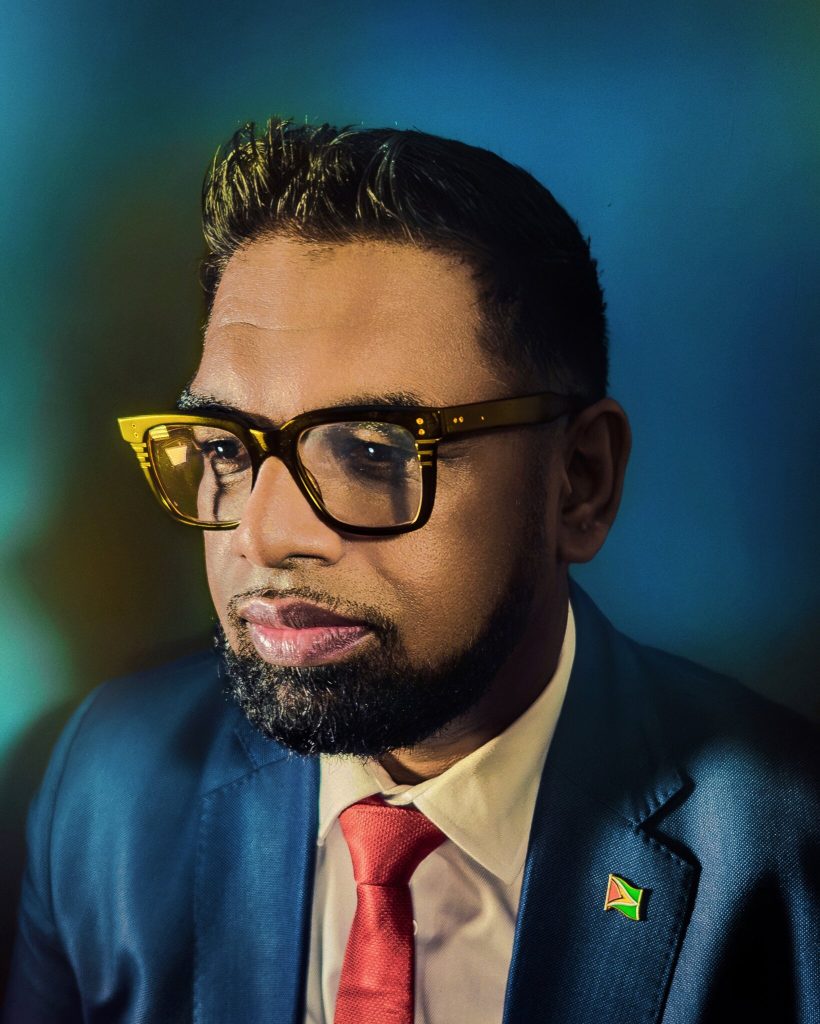
Mohamed Irfaan Ali, president of Guyana
Credit: Dina Litovsky
‘We can’t be naïve. The world will need fossil fuel a long time into the future.’
Tucked beside Venezuela and Brazil, Guyana is full of lush tropical rainforests and has started innovative programs to protect its biodiversity. It is also an ascendant oil exporter and is set for some extraordinary growth in oil production in the years ahead. President Mohamed Irfaan Ali feels this paradox intensely. Last year, he accused a BBC reporter of “lecturing” him on climate change and railed against the moral “hypocrisy” of Western nations who criticize Guyana while denying financial support for environmental conservation. When we spoke, Ali described how his government is working to defend against sea-level rise and deforestation. At the same time, he spoke proudly of growing revenues from fossil-fuel production and of putting some of those profits into Guyana’s renewable-energy transition.

William Ruto, president of Kenya
Credit: Dina Litovsky
‘When it comes to emissions, we are paying for a crime that others committed.’
President William Ruto of Kenya has worked to position himself as Africa’s climate leader. He promotes Kenya’s gains in bringing electricity to a majority of its population. And he points to the country’s energy system, which is powered in large part by biofuels and wind and solar power, rather than coal, oil and gas. To hear Ruto tell it, Africa has the potential to become a global powerhouse in renewable energy. It’s a compelling vision, but as Ruto himself has discovered, realizing it is no easy feat. Many African countries, including Kenya, have struggled to obtain competitive financing for clean-energy projects. And many citizens who find basic government services lacking have not thrilled to Ruto’s focus on pressing for global climate action. Over the past year, antigovernment protests have broken out across Kenya, with dozens killed by the police amid anger over currency fluctuations, rising living costs and subpar infrastructure. But Ruto says he remains optimistic that his people will come around to his vision.
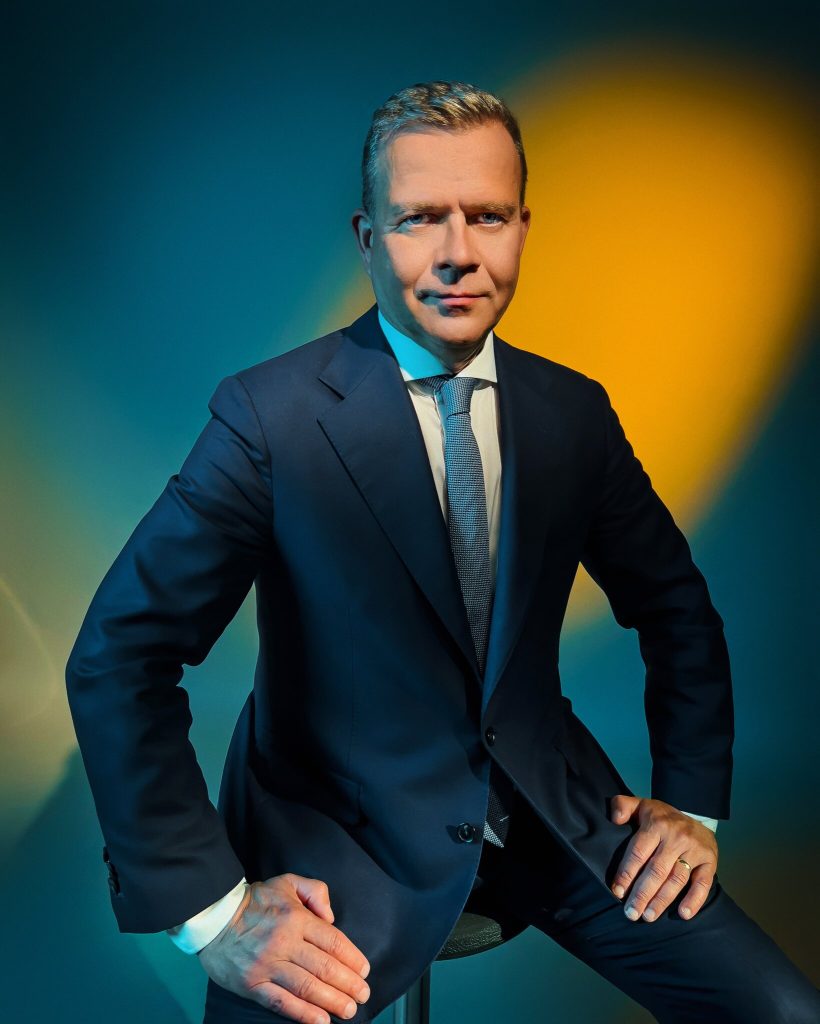
Petteri Orpo, prime minister of Finland
Credit: Dina Litovsky
‘We are going to change our whole society.’
In recent years, Finland has done something unusual: It has managed to cut down on carbon emissions while growing its economy. Of course, it helps that the Finnish public is wildly supportive of government action on climate. Still, Finland is notable for having one of the most aggressive climate targets in the world, with a commitment to being carbon neutral by 2035. The country has made major investments in wind energy, nuclear power, hydropower and biofuels, which account for nearly all of Finland’s electricity. But going green is not easy in every sector. Finland is still reliant on oil beause of the slow uptake of clean alternatives for shipping fuel. When we spoke in July, Prime Minister Petteri Orpo described a nation being transformed by rising temperatures. The Arctic, including Finland, is warming nearly four times as fast as the global average, he said. Arable land is moving north as remote regions thaw. Summers are hotter. (Before Orpo arrived for our interview, a spokeswoman for Finland’s U.N. mission told me that people in her hometown had begun putting bedsheets in the freezer.) Despite these challenges, Orpo wants to show that radical action is possible.
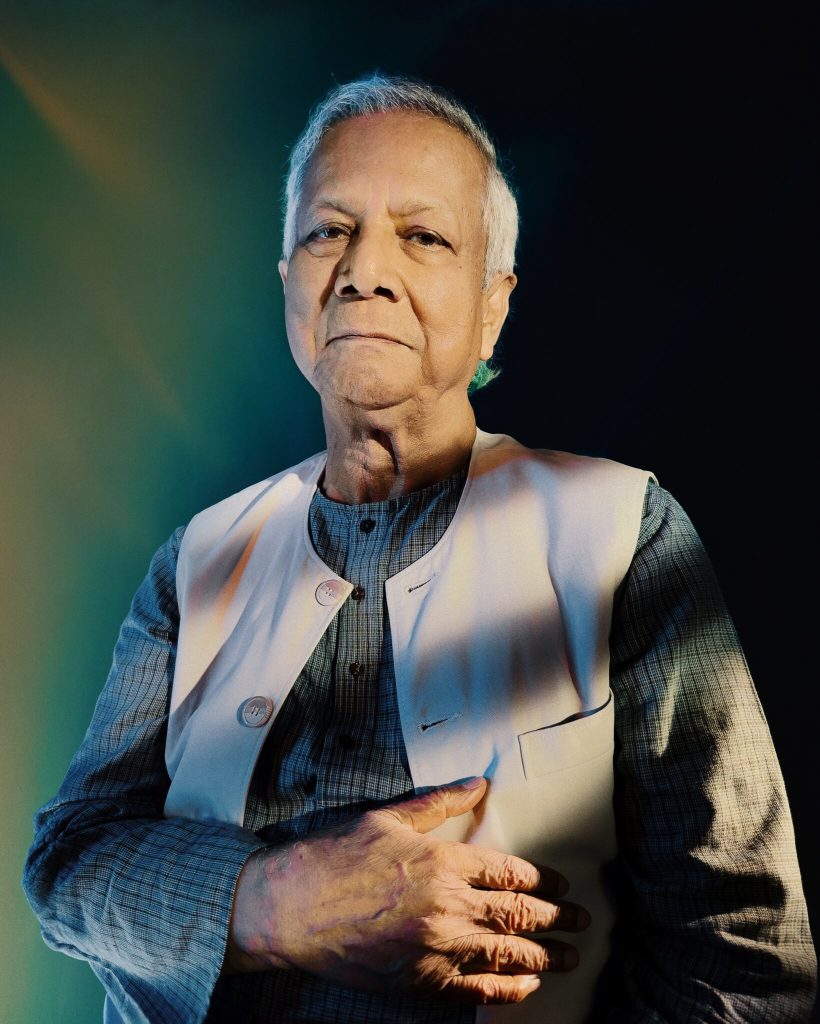
Muhammad Yunus, chief adviser of Bangladesh
Credit: Dina Litovsky
‘Our land is getting squeezed. It’s not a very happy situation.’
Bangladesh is among the most crowded countries in the world. With a young population packed into a low-lying delta, the country is facing acute challenges from rising sea levels and extreme heat. Agriculture is being disrupted. Populations are being displaced. Bangladesh is dealing with internal conflict, too. Last year, a popular uprising prompted the prime minister to flee to India, setting off a constitutional crisis. Days later, the country installed Muhammad Yunus as chief adviser. Yunus, an economist and entrepreneur, won the Nobel Peace Prize in 2006 for developing the concept of microfinance, or giving small loans to low-income people who lack access to traditional banks. He told me that he still looks to his experience with microfinance as an example of the way small individual actions can produce widespread change, and he believes that the same is possible with climate
NYA Thanks The New York Times! Read the supporting interviews here.