By Bob Hazelwood (Director of Engineering & Product Development, Andover Audio)
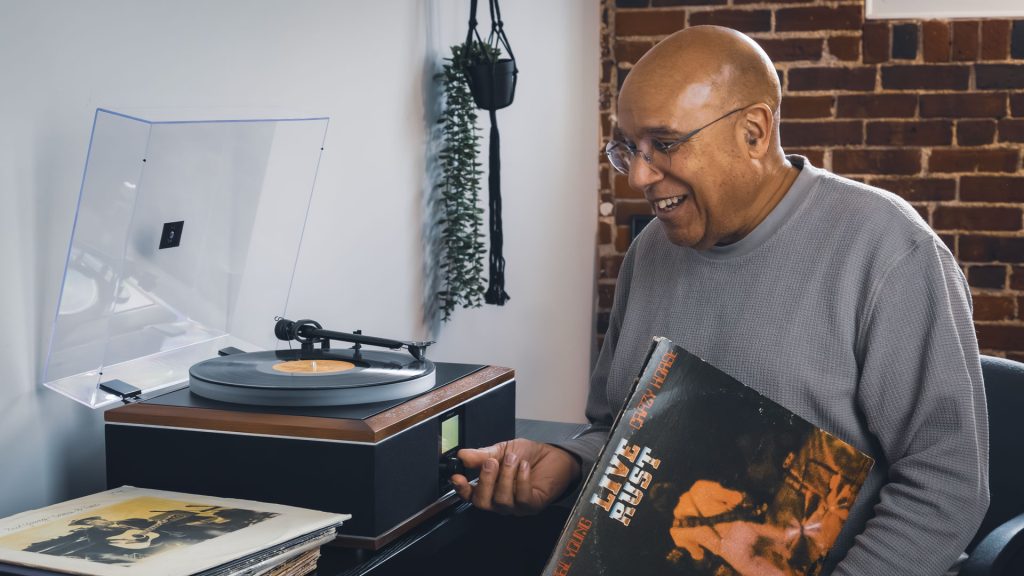
A few weeks back, Neil Young mentioned our Andover-One Record Player in a Times Contrarian article. Given his level of artistry and commitment to sound quality, it meant a great deal to me and the team behind Andover Audio to hear his positive, unprompted review. Shortly after, I was invited to write about a topic, and I welcomed the chance to share my brief perspective on the importance of physical media—specifically vinyl records, the need to support the artists who create them, and the value of stepping out of the endless scroll into a more meaningful, more appreciative way of listening to music.
I’ve spent decades designing consumer audio products in the Boston area, where the craft has always centered on creating a natural, three-dimensional listening experience. My interest in vinyl never faded through the years—not through the arrival of CDs, the MP3 era, or the rise of streaming platforms. As formats shifted, I held onto records because… they held onto me. Records always felt more intentional, more human, and more connected to the artist.
They offer something streaming can’t. Not just album artwork and liner notes, but physicality—the moment the needle touches down, the quiet, crackling expectation before the first note, and the way time slows into listening instead of browsing. Records endure because that experience endures. The interaction between the listener and the record—the ‘ritual’—becomes part of the music. And it’s subtly different each time, given the mechanical means of playing them.
None of this takes away from the value of music streaming, of course. It is unmatched for convenience and for discovering new artists. I find new music on streaming services every day, and I’m sure most listeners do too. But it comes with realities artists cannot escape. Neil Young has spoken plainly for years about the limitations of both streaming fidelity and its economics, especially how royalties simply don’t support artists the way physical media once did. Most musicians have no influence over how their work is delivered, compressed, or compensated. And even today, the dominant platforms remain far from making true high-fidelity listening the standard.
The evolution of AI adds another wrinkle: prompt-generated music—based on the styles, patterns, and DNA of countless artists—is making its way onto music results and playlists, all without sending a cent back to the people who shaped those sounds.
In this context, it’s no surprise that vinyl continues to resonate, especially with younger listeners who never experienced its first era like I did. I speak with them almost nearly every day. On the surface it seems they are chasing nostalgia. They’re really responding to a world optimized for continuous, unrelenting distraction. Vinyl resists that. You choose a record, open the jacket, place it on the platter. The pace slows. What was once considered mechanical inconvenience now feels strangely liberating for our always-on digital world.
The business realities behind the music are often invisible to the average listener, but the emotional reality isn’t. When someone plays a record, they feel more connected—to the music, to the artist, to the experience. It signals that albums matter. It shows that listeners still hunger for a direct, undiluted relationship with the art—not packaged, sorted, and served by an algorithm, but entered into with intention.
So the next time you find yourself drifting through the infinite content abyss, put on a record—or whatever your preferred physical format is. Curate your own playlist. Be deliberately analog for a moment. Whether you’re listening passively or with full attention, the experience becomes something elevated—something that restores the connection between the artist and the listener.
Bob Hazelwood
Boston, MA
P.S. Curious about getting into vinyl or returning to it? I invite you to visit andoveraudio.com to learn more about our Andover-One and SpinPlay record players.
NYA Thanks Bob Hazelwood @ Andover Audio!