
By Dimitri Soudas Contributor
OPINION
The Conservative Party that was shaped by the nation-building of Sir John A. Macdonald, the moral conviction of John Diefenbaker, the bold ambition of Brian Mulroney, and the steady discipline of Stephen Harper is far greater than any one man. It is a party rooted in history, principle, and purpose, a party built to serve the country, not the ego of a single leader. No individual, no matter how loud or popular, has the right to rewrite that legacy or distort it into something it was never meant to be.
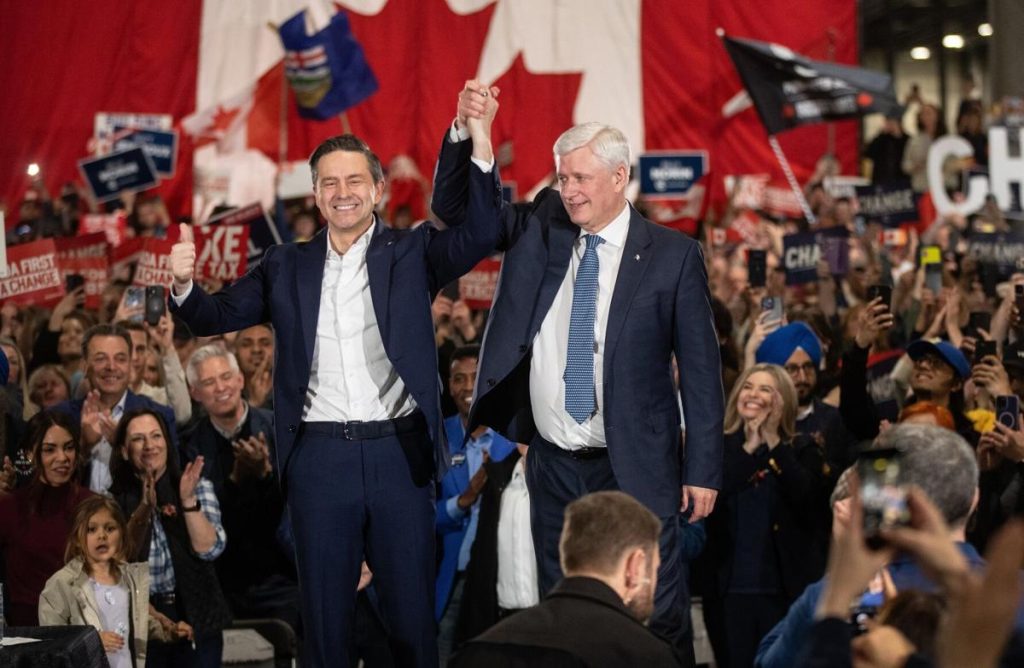
Leader Pierre Poilievre is dismantling the principled, serious and credible Conservative Party Harper worked so hard to lead and bring to power, one of substance, maturity and integrity.
As a senior aide to Prime Minister Harper, I had the privilege to witness first-hand his leadership style: serious, principled, steady and deeply committed to the country’s long-term interests. He was the embodiment of what Canadians should expect from a national leader, governing with discipline, competence and a profound respect for Canada’s institutions.
He brought credibility to the Conservative movement, not through theatrics, but through thoughtful policy-making, fiscal prudence, and strategic vision. He was never swayed by short-term headlines or the chaos of the news cycle. Instead, he focused on results: balanced budgets, trade expansion, national security, and pragmatic federalism.
Harper spoke less, but when he did, it mattered. He built a unified party that reflected the broad spectrum of conservative values, from fiscal responsibility to national unity, without sacrificing seriousness or integrity. In an era of rising populism and political noise, Harper remains a reminder of what real leadership looks like: thoughtful, focused, principled, and unwavering in service to the country.
Harper was able to unite fiscal conservatives, social conservatives, progressive conservatives, libertarian conservatives, Red Tories and Blue Tories into a serious, policy-driven coalition grounded in discipline, pragmatism and national interest, a legacy now being unravelled by Poilievre’s politics of spectacle and division.
This week, Poilievre accused Prime Minister Justin Trudeau of committing what he described as the worst possible offence for a head of government, violating the Criminal Code and escaping justice. He claimed that Trudeau’s free vacation from the Aga Khan was a clear-cut criminal breach and that the RCMP deliberately chose not to lay charges.
Poilievre went further, declaring that Trudeau should have been criminally charged and sent to jail. He went as far as accusing the RCMP leadership of being “despicable” and actively shielding the Liberal government from prosecution.
In a rule-of-law democracy, no opposition leader should ever call for a prime minister or any political rival to be jailed. It undermines confidence in our justice system, our federal police and ultimately the Crown. That kind of rhetoric isn’t strength, it’s recklessness and it shows a leadership approach that remains rooted in grievance rather than governance.
Months after losing the federal election, Poilievre seems not to have learned the lessons of his electoral defeat.
For all the fiery slogans and viral clips, Canadians saw through the performance. What they needed was a prime minister-in-waiting. What they got was a man addicted to opposition, stuck in partisan combat, incapable of transformation and unwilling to rise above the instincts that had always held him back.
Voters wanted maturity, reassurance and vision. He gave them grievance. He ran as the angry Question Period debater, not the steady hand of a G7 nation. The result? Swing voters waited for growth that never came.
His message was reduced to punchlines. “Carbon Tax Carney” and “Sneaky Mark Carney” may have earned social media points, but it insulted the intelligence of voters craving real dialogue on housing, inflation, crime, immigration, climate and affordability. As Carney put forward a detailed, albeit debatable, vision, Poilievre delivered slogans and sneers. Canadians rightly asked: if this is how he acts in opposition, how would he behave in power?
Worst of all, Poilievre failed to build a team. A party rich with talent was never showcased. No foreign affairs lead. No visible finance minister. No credible plans for trade, immigration, or defence. It was a one-man show and when the curtain rose, there was no cast, just more spotlight on him.
The most baffling part? Trudeau’s record was wide open. Canadians were ready to hear a compelling case. But Poilievre couldn’t deliver one. He had the opportunity to prosecute a decade of Liberal failures, and instead leaned on hyperbole, exaggeration and recycled sound bites. The contrast never sharpened. The plan never appeared. He delivered none of it.
His latest comments show once again he has failed to make the leap from critic to leader.
Canadians are tired of the anger. The mockery. The volume. They need calm, confidence, and answers. Yet, despite warnings from advisers, polls, and “common sense,” he is still giving them attacks, blame and fury.
In the last election, Canadians didn’t reject conservative ideas. They rejected Pierre Poilievre.
Months later, there’s little evidence he has reflected, adapted, or grown. If anything, he seems more committed than ever to the very approach that cost him credibility with the voters he most needed to win.