

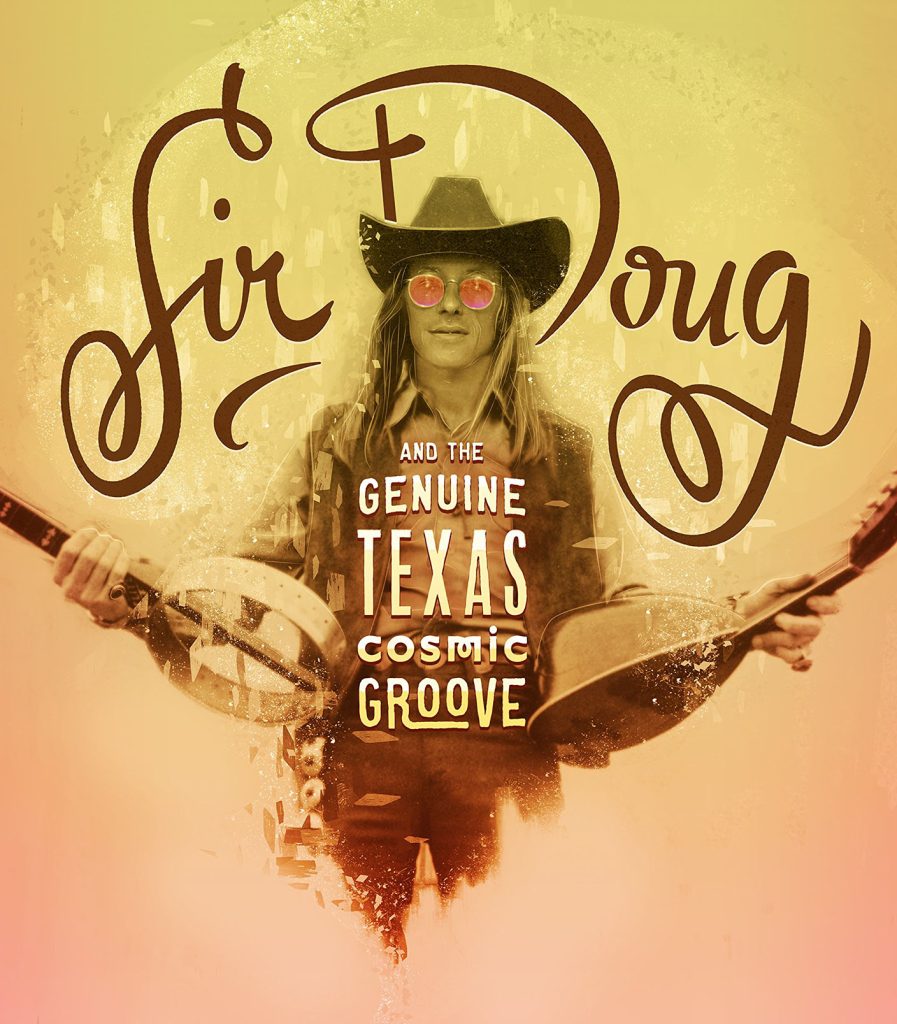
I first met Doug Sahm over a half-century ago. He had started hanging around Austin in the early 1970s, fresh back from several years ripping and running through the Bay Area. I had never met anyone like him, either. Doug had a way of seeing the world as if he was in the middle of everything. He could play any style of music better than just about anyone else, talked faster than all of them and had more fun doing it than seemed legal. Doug Sahm really did have his own trip running at all times. As he got to be known around Austin’s small clubs in those early years it seemed like the whole city rose in quality. Everyone learned that music was the key to it all, and it needed to be played with passion and soul. Doug Sahm taught us that, just by being himself. Until the San Antonio native died in 1999, he was our very own guru. Doug also showed many of us how to stand up for ourselves and what we believed in. The lessons were amazingly fun, and completely endless.
In 1975 when a few of us Austinites started the alternative AUSTIN SUN newspaper, I knew my first story had to be an interview with Doug. He was the only way to begin things. So one fine afternoon Jim Groenewegen and I went out to Doug’s house on the hill in the outskirts of Austin to talk. And talk. A little bit of that conversation is below, and still shines in my mind as a primer for so much of what life was like in Texas then. Doug Sahm went on to many peaks and a few valleys after that afternoon. When he founded the Texas Tornados in the late ’80s I was working at the band’s label Warner Bros./Reprise Records, and got to get on the bus again to never-ever land. Sometimes you just get lucky in life.
The 2015 documentary, SIR DOUG AND THE GENUINE TEXAS COSMIC GROOVE has finally been rereleased and available for all to see. It is a non-stop journey in Doug Sahm’s reality, through the life of a true Texas tornado. See www.sirdougfilm.com for more information.
Austin Sun November 1975
By Bill Bentley and Jim Groenewegen
Doug Sahm is not always an easy man to talk with. He moves fast and hardly ever in straight time. Shuffles, triplets, rhythm & blues, rock & roll, country & western, conjunto: it all mixes together in Sahm’s speech.
His professional career covers more than a decade and includes the whole spectrum of Texas music, and then some. Born and raised in San Antonio, “Little Doug” was starting out with steel guitar in country bands at age 9. Blues bands in junior high and juke joint rock & roll groups in high school are part of his past.
After high school Sahm went for the big time: Top Ten for the Sir Douglas Quintet with “She’s About a Mover” and “The Rains Came,” national TV, trips to Europe, criss-crossing America and meeting everyone there was to meet in the music business. An untimely bust for marijuana possession at the Corpus Christi airport in 1966 eventually drove the band to California. Doug lost no time in putting together the Honky Blues Band in San Francisco, which even today is still talked about. Another hit, “Mendocino” in 1969 brought back the Quintet and keep Sahm moving fast.
Finally, enough was enough and Sahm went home to Texas, specifically his hometown of San Antonio. He recorded THE RETURN OF DOUG SALDANA, at the same Houston studio where it all had started with the Quintet and “She’s About a Mover.” Soon enough he could be found onstage all over Austin with Freda & the Firedogs at Bevo’s or the Broken Spoke, with Dr. John at the Split Rail, playing a free show in 1972 at the Armadillo World Headquarter with members of the Grateful Dead and with Freddie Fender at Soap Creek Saloon. Texas might not have been California but there was no way Sir Douglas was slowing down.
The next connection was with Jerry Wexler, producer extraordinaire and one-time co-owner of Atlantic Records. The DOUG SAHM & BAND album Wexler produced soon followed, the band being Bob Dylan, Dr. John, David “Fathead” Newman and other bright lights. The United States was once again made aware of Sir Douglas Sahm, and another notch was added to the Texan’s legend. National tours followed and there were the TEXAS TORNADO and GROOVER’S PARADISE albums. The music never stopped.
To find out what Doug Sahm is up to at present we went to his hilltop house on the western edge of Austin. Between local engagements, long distance calls to both coasts and an upcoming California trip we managed to pry Doug loose for a few hours of conversation. For the sake of lucidity the interview has been organized into sections on Doug’s early period growing up in San Antonio, his years in California and ideas and experiences with record companies and music today. Needless to say, it is only a glimpse of all that was said.
Bill Bentley: What kind of bands did you have while you were in school?
Doug Sahm: Blues band in junior high and rock & roll in high school. Little Richard, Fats Domino and all the hot stuff. I got the curtain closed on me once for doing rock & roll in the ’50s. They had this fear of rock; they didn’t want anybody “Blackboard Jungleized.” I was doing a show at my school and the principal told me what I could and couldn’t do. Nothing ugly or racey, he said. To hell with that. I came out strong with “I can’t believe you when I leave you,” just a little trip I thought would be cool and he ordered the heavies to pull the curtain. All the kids rioted. My mother had to go to the PTA and all her friends were upset because her son, a professional, had been treated in such a weird way. I just sat back and laughed. Those things happen when you’re a kid. You look back and it’s hard to explain.
BB: Did Augie Myers play organ with you when you were in high school?
DS: No, he played with the Goldens. Him and Denny Ezba. They were playing the white boy trip on the northside and we were playing all the funk music. Denny and the Goldens were famous; they had a lot of hits. Augie was the first longhair in San Antonio. I went down to Houston to record with my band for Huey Meaux and Huey said, “You need to get Augie and that organ.” We went back to SA and worked up that whole sound. That’s how it all came about: “She’s About a Mover” That was the result.
BB: Was Augie on organ because of all the British bands that were big then?
DS: That too, but see, it did fit. It was just magical. Me and Augie had magic together. We’ve even considered cutting another Sir Douglas thing here for the old fans that dig that sound. It’s groovy now because he’s got his band and I’ve got my players and there is still that inter-binding thing. Here we are, 1975 in Austin, and everybody is healthy and grooving and still around. The old crew. It’s really rewarding. Now out in California it’s still struggling. That’s why I’m looking forward to getting out there and doing some gigs and waking them up.
BB: Getting back to San Antonio, who else were you with there?
DS: The main influence was Spot Barnett; a black musician. He made a bunch of obscure records, has been busted three or four times; now I’ve lost track of him. He was the king: five old ladies, 20-something kids and the finest bands. Three horns, Big Bud Harper singing. He’s so heavy he could jump off the bandstand, break up a fight, knock the cat out, carry him off, get back onstage and finish the song, never missing a lick. He was a superman amongst men. And it was different back in those days. Then it was hip to be a white guy if you could be around the black guys and the chicanos. That’s where Freddie (Fender) and I came together. We both had local hits already and he and I just loved each other immediately.
BB: Were you playing any country then?
DS: No, no. It was all Westside music, like Sunny & the Sunliners, “Talk to Me,” and Ray & Renee–tripping stuff. Some of them made it and some didn’t. I didn’t break nationally until the Sir Douglas Quintet, but in high school I was having Number 1 records in San Antonio. And then the Quintet happened, which is where Roky Erickson and I are connected. We were the big bands, the first long-haired Texas bands. The 13th Floor Elevators and the Sir Douglas Quintet. We both went through a lot. We got popped in Corpus–that’s why we blew Texas off for five years and moved it all out to California.
BB: Were you playing the Black clubs in San Antonio?
DS: Sure. When we were fourteen we already had better blues bands that most cities have now. Later we were at the clubs, seeing Spot. We’d walk in and say, “Hey, you got a band here?” The black cats would say, “Oh man, you bunch of honkies. Can you play that guitar? Let’s see what you can do.” And I’d say, “What you want to hear?” and we’d hit it with “Further On Up the Road,” or something like that. They’d invite us back and kind of took us under their wing. We’d play off nights or I’d play bass in Spot’s band when his regular man was down. In those clubs guys would play a gig for years. Like Spot worked the Ebony for six years in a row. My band played the Blue Note for almost two. You just dug in and there would be your friends there every night and a big party. In the San Antonio clubs there was nothing but hustlers, strippers, pimps and a few straggly flat-topped cats from the Lackland air base. There weren’t any hippies.
BB: Did Junior Parker influence you then?
DS: Yeah, I really admired him when I was coming up and it hurt bad when he died. It’s weird. All my great influences have died off. Like T-Bone Walker; that’s the guitar style I have in my hands. I have to admit it: there are very few who can play that style. Lefty Frizell was my country influence on vocals. Bob Wills influenced my country musicianship. And then Junior Parker influenced my blues singing. And now they’re all gone. It’s funny, but I can get all their styles in my music. It’s just a switch, a feel. It’s magic, in a way.
BB: When you were younger did you play any swing music?
DS: Some, but by the time I was fifteen I was already playing joints, all the big ’50s music: Little Richard, Fats and very little white boy except for some Elvis.
BB: But younger, you played steel?
DS: In country bands. My country era was from about when I was 7 or 8 when I was called Little Doug and then put out my first single “Real American Joe” in 1955. I did that until junior high. You grow up fast in Texas. Like my little boy at 10 is a pretty hip drummer. When I was ten I was around Bob Wills. I remember seeing Hank Williams. Then when I was 13 I thought it wasn’t hip anymore—country music. I wanted to be Elvis and Little Richard. Rock & roll was it. That was before we ended up in Frisco and began playing blues again. We were one of the first bands there to really play blues.
BB: How did the Honky Blues Band get together then?
DS: That’s what I want to do again if you want to know the truth about it. Get all those guys together. Wayne Talbert, he’s a complete madman, but he’s it for piano. When we got the Honky Blues thing together I brought Talbert out from Texas and I ran into drummer George Rains, and we pulled it all together Mac Rebennack for some vocals. We did THE HONKY BLUES + 2 album on Smash, and right away we were working. No giant trip but fair bread around the Bay area, the Avalon and gigs in L.A. I had some hits by the time I got to California so I went into the agencies and I said, “Look, I’m from the sticks, I realize that, but we are #42 with a bullet in Billboard and we need some jobs.” And we got the work, more than I could handle.
BB: What happened to the Honky Blues group?
DS: Well, that was a great band and everybody knows it. But for whatever quirky reason, the “Mendocino” hit happened and that sound, the Quintet sound, was what everybody bought. So the record company said, “That’s happening, and I just had to go with it. Instead of taking 15 people on the road for three or four grand we’d take five people. Still, I love that big band horn section blasting away, George Rains on drums. It just can’t be topped.
BB: You’ve used horns in your bands off and on since you started. I’ve always been curious about the fact that New York jazz horn players are originally from Texas.
DS: There’s a reason for that. Dallas has always produced horn players. and Houston and Ft. Worth more than San Antonio. Look at it. What are the odds that Ornette Coleman and King Curtis could come from the same town. I’m sorry, I’m an odds player, but that’s heavy odds. That’s the way it was. San Antonio had the bass players and the guitar players and Dallas/Ft. Worth had the horn players. Texas is unbelievable.
BB: How about all the San Antonio people like tenor player Rocky Morales?
DS: They’ll always be there. There’s a certain element that will always be buried in San Antonio. You’ll never get them to leave, it’s their world there. I could take you down there and turn you on to the best trumpet player in the world, the best steel player, and they’re both teaching. San Antone is my home town and is one of the weirdest places in the world for some things, but believe me it’s got the players. It’s like blues bands in Austin, not to take anything away from them, but they’re harmonica-type bands. Guitar, bass, drums and all the lead on the harp. That’s just totally opposite from the San Antonio thing. There you have the Wayne Bennett-type guitar, with the three horns punching and a big Hammond or piano. That way you can lay back. That’s what I discovered.
BB: When you were touring, who were some of the bands you worked with on the same bill?
DS: All of them. Sooner or later you are working with just about everybody. The Byrds, Creedence, Buffalo Springfield, the Dead, Dylan, everybody. I mean, we were touring in ’65 which is like the ground floor for this rock band trip. I remember a show at the Cow Palace in ‘Frisco then. The stars were the Beach Boys, the Lovin’ Spoonful and wee the third act. As openers, the local bands, they had the Airplane, and the Dead. I remember telling Garcia, “Hey, you’re going to make it.” That’s where our friendship started. Then I would run into him in the park and we’d be on trips. That’s where I got into the Dead world.
BB: What about Dylan?
DS: I first met him then, too. In ’65. We’ve had a friendship for a long time. He decided to play on a record I was making in New York. We were just friends playing together. All of a sudden people made a big thing out of it. I can see how he got bitter toward the press. He couldn’t brush his teeth without it being something heavy. That’s being under the big gun, that pressure.
BB: What’s the difference in audiences in those early shows and now?
DS: You know the real change? In the old days, the bands were stoned and the people weren’t. That was before the people got stoned. There were little kids in the crowds, 13 and 14 years old. And they weren’t like the kids today, 14 and stoned out of their minds. To see the change look at the Dead. That’s the perfect example of the changing crowd. Everybody knows the Dead are THE head group. They helped start it with Owsley, San Francisco, all those trips. And they were doing it for years as an underground group. Then everybody decided, “Let’s drop some acid and dig the Grateful Dead.” A big show trip, right? And they became a giant commodity. Harder gigs, overdoses in the crowd. They didn’t need that so they did the only thing they could do, they retired to their little castles. Sometimes I think the old days are over; now everything is aimed at the giant monster act. Still, I see some room in the middle, which is what you shoot for, a small trip we can control and maybe in the process put something out with some magic in it. Not the kind of thing you read in Billboard or on the charts, maybe. Something with some love in it. Now, for commercial music, if me and Augie wanted to, we could get a bass, drummer, my voice and his organ and start talking shit and probably get a hit. But that’s not the point now. It’s just not where our heads are at.
BB: Are you thinking of recording more country things?
DS: Sure. I don’t ever stay in one bag. I like to do it all. A lot of people think I’m a cosmic cowboy. Well, maybe so, but I’m a rocker too and I want to be Austin’s rocker. I have a lot of people around me that can’t stand country music.
BB: Do you think Austin sometimes gets fishpoled into a cosmic cowboy aura? One-quarter of the music here is getting out, but at the same time you’re losing three-quarters.
DS; Well, people have opinions but remember Texans aren’t pushovers. They know there’s the whole spectrum and they know I’m a man of many worlds. For instance, I’m a part of Willie Nelson’s world and I love it but at the same time, I’m part of the Grateful Dead’s world. And those two worlds just aren’t the same world. One night I might be playing with twin fiddles at the Broken Spoke and the next night I’ll be down at Antone’s playing blues. In that way Texas is a paradise, because all that music is here. But as far as recording goes, it’s a whole other multi-leveled thing. It’s a different ballgame. Like with Warner Bros., the GROOVER’s PARADISE phase, a lot of people in their organization thought we were too Texan and they wouldn’t promote our record. They tried to tell me how I was raised and how I have to live my life, and man, that I’ve got to stop and be a wimp because they didn’t dig how I was. I’m sorry, I ain’t bending. I’m Texas, Texas manhood, and I’m going to play that way. But it did get me out of the contract. That’s why my head is so free today, because I’m not owned by anybody. If I’ve got to be my own president and my own publisher, I don’t give a damn. If I only sell twenty thousand records through two-bit accounts then that’s the way it is. But a lot of people are doing it, making independent records.
BB: At some point do you have to come back to the big companies?
DS: A lot of people think that we need the companies. I don’t know if we necessarily do. What are they to do when they don’t have artists? That’s why I’m a threat. If I can pull it off and have a hit record where I’m the artist, I’m the writer, I’m the producer and it’s on my label, then that will blow some minds. They already know that there’s a threat to the business and that it can be done by renegades like me.
BB: Record companies have been cultivating a hip image in recent years for both artists and the public. Do you think they’ve changed much in that time?
DS: They’ve gotten worse. Their ears have turned to stone even more. The companies have developed a lot bigger market. So they have to go by what’s going to make it on that mass scale, using computers, auditors, and all those business types. For every floor of groovers, the receptionists in blue jeans and hip dudes standing around talking jive, there are three floors of guys in grey business suits staring at calculators. You can’t even talk to these people and they’re the ones that run the companies.
BB: A couple of years ago the Grateful Dead formed their own label, Round Records, and eventually attempted their own pressing and marketing. What happened there?
DS: Okay, they were a giant thing when they got their own show. They jumped in big but at the same time they had to feed a hundred people a week. Dogs and cats and kids and a huge family. So they had to take money out of the record company to feed everybody. That’s a big nut to cover.
BB: But you’ve got to be that big to be able to dictate your own terms?
DS: You do. Jerry Wexler used to give some push my way when I was with Atlantic and sometimes it worked, and sometimes it didn’t. He always used to tell me how he could only get his people to do so much. He could holler and scream with the promotion people, but if their hearts weren’t into it, they just weren’t into it. Also, there’s a big difference with Atlantic now. First, when the company started it was just Wexler and Ertegun. They had “C.C. Rider.” It was just them. But now Atlantic is a small part of the Warner monster, and Wexler can’t do that soulful thing with all of his new artists anymore. It’s like a new era had dawned: the new people go the new way. And Wexler resigned, bless his heart.
BB: It seems like the big difference between Atlantic, which isn’t that big of a label, and Columbia is that Atlantic doesn’t have a huge stable of acts like Columbia does. They’re got Aretha Franklin, a few big rock acts and their jazz catalog. But not all the Andy Williams and tons of MOR material. How can Columbia operate with such a gigantic stable.
DS: Easy. Some of them are write-offs. Columbia can use their acts that get the hits to keep all the money coming in and then just have a whole other area of artists that are the write-offs. It’s business, pure and simple.
BB: Locally, even with all the activity of Austin music, there isn’t a big wealth of production facilities here.
DS: In Texas, it’s Huey Meaux and Bill Ham with ZZ Top as far as rock & roll people making music.
BB: Huey Meaux is one of the legends of the music business.
DS: He’s phenomenal. Everybody has always known that Huey is one of the great hustlers in the history of the record business. It’s an honor to learn from him. He’s a great teacher. I can’t say he doesn’t drive a hard bargain. The man is a businessman and some people may think he’s a little hard but they don’t really know him like I do. There’s just something there between us. It’s as deep as it comes.
BB: Are you going to try and keep yourself Austin-based?
DS: Probaby, but you know, it could really change. Just like if I go to L.A. I might be talking rock star stuff again. I doubt it, but you never know. I can get all goosed up on some kind of trip. I never know sometimes what I’m going to do, except that I’m going to try to be playing the best music I can when I’m doing it.
Bill Bentley