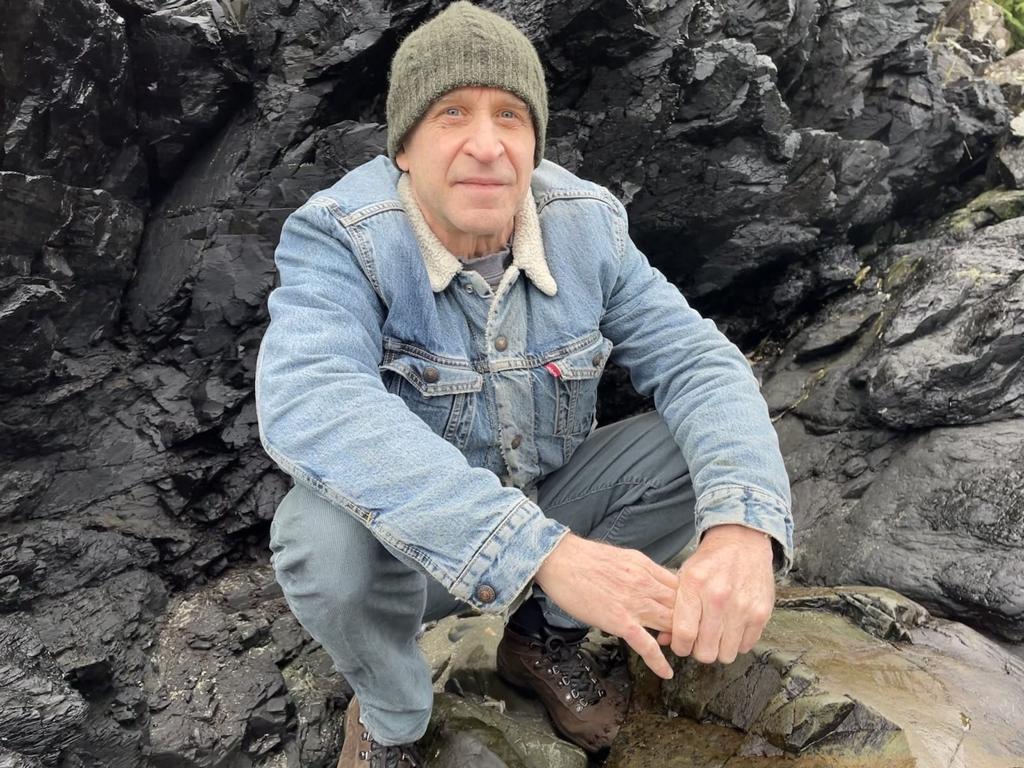
By Douglas Heselgrave — via restlessandreal.blogspot.com
Review by Douglas Heselgrave
You were warned. Or, better to say, you were tipped off when Neil Young released ‘Second Song’, the title song of his new album, a month or so ahead of the record’s official release date. Within its leisurely running length of more than eleven minutes, there’s a lyric that establishes the theme reflected in each of the new recordings:
“I dream a way of living, a way of sharing what we find. A way of walking slowly through the smoky leaves of time.”
“Second Song” is a slow record. A mostly acoustic record with nary a guitar solo or elongated instrumental break anywhere. The songs are conversations in real time. Old world, analog pre-digital conversations. Fireside talk.
“Second Song” may be the most vulnerable collection of songs Neil Young has ever released and that’s saying a lot. Throughout his career, many of Young’s most powerful songs – “Sugar Mountain,” “Helpless,” and “Journey Through the Past” have been told by characters pivoting at a crossroads, wistfully looking back, perhaps trying to recapture something that has already slipped through their fingers. Remembrances of things past are nothing new in Young’s musical universe, but he’s never deconstructed the barriers between himself and his listeners to quite the extent he does here. It’s no small accomplishment that more than sixty years into his career, Young has shuffled the deck and created a set of songs that communicates a different quality of presence than we’ve ever heard from him before.
The lyrics on “Second Song” reflect insights that usually only come out face-to-face and in person, things spoken when walking at our own pace in the silence of nature. They come from an understanding of the power of words, where it’s important to choose and weigh what you say in an unhurried way, and are careful not to throw anything superfluous out into the world. They come from a place where words are often inadequate; at best they are the finger pointing at the moon.
Every lyric and musical phrase on “Second Song” paints a picture that counterpoints – is the antithesis of – the world we currently find ourselves in. It’s not simply that all of the songs are communicated from a first-person perspective. Neil Young has used the word “I” in dozens of his songs, but this isn’t the “I” of, say, “Powderfinger,” where he’s embodying a character from his imagination. These are songs where the narrator sometimes hesitates, breaks his stride and loses his way in the middle of telling his story. “There’s something I want to say and say it slow/I’m a little scared of it…so here it goes.” It’s an approach that runs the danger of coming off as awkward and insincere, but Young’s delivery is riveting, and his warbling confessional voice draws listeners in rather than pushes them away.
The closest parallel to the narrative voice running through “Second Song” can be heard on “Thrasher” from “Rust Never Sleeps,” where Young surveys the behaviours of those around him and decides not to participate anymore. There’s a sense of moving on and staking out new territory after realizing that the moment you were living in has passed. Some things are only understood when glimpsed through the rear view mirror, and whether you’re 18 or 80, leaving home is always hard, no matter how much you know that you have to go.
The images and language Young employs in these new songs are familiar. Burning leaves, the gentle arc of birds overhead, sunrises, sunsets and the miracle of falling snow create a palette of colours form a gently moving meditation. Like a comfortable old cardigan that has perhaps seen better days, but remains indispensable, nothing in this record pushes or chafes. There’s little variance in tempo between the songs as Neil paints a groove and creates a sonic universe around the lyrics that the listener can choose to enter.
One of the things that’s humbling and impressive about these new songs is that Young, if he is truly the subject of these narratives, sometimes doesn’t come off that well. The persona he presents is flawed, and occasionally remorseful about things that he cannot go back and change. In the opening track, ‘The Foggy Edge of Time,’ he calmly shares the mistakes he’s made with his listener, admitting that he reached a point where there was nothing he could do other than leave his home and everything and everyone he loved behind. Young sings with the kind of bravery and poise that can only come from facing your demons and coming out the other side.
The next track, ‘Day after Day’ may be the most beautiful and heartfelt song on the album. The elusiveness and intangibility of passing time has been a recurring theme in Young’s work since the beginning. That the mirror he shone in ‘Old Man’ where he first sang about the transience of life, has been tilted back in his direction is not lost on him. He sings, ‘Just let me get a grip and let it go/there’s nothing worth waiting on, so I gotta go,’ realizing that time is precious and there’s no time to regret. It’s important to understand and make peace with the past, but there’s no sense in wallowing there. It’s a masterfully unrushed performance in which Young sounds as if he’s trying to find the words, singing and composing on the fly. The listener feels as if he is receiving the singer’s thoughts and emotions in real time as they are unfolding.
The third song, “Earth Girl” provides a break in the flow of confessional intensity expressed in the first two tracks. Short and sweet and uplifted by beautiful harmonies from The Chrome Hearts ensemble, it’s a classic Neil Young love song in the spirit of “Harvest Moon” and ‘Tumbleweed.”
The title track, “Second Song” is the centrepiece of the album, which all of the other songs embellish and revolve around. It helps to listen to it while watching the long, slowed down video that Young released to accompany the song. The film stock is blurry and washed out with age, featuring nothing more than a slow drive down the road through his old ranch property where he likely spent his best days. Where between the joys of raising children, creating music, walking, exploring and simply being, he may have made the biggest mistakes of his life and said things he wish he didn’t say. It’s a song that strongly evokes the emotions that are imbued and resonate from a sense of place. Places cradle our feelings, thoughts and emotions. The smell of the air, the sound of a trail crackling under our feet, the wind through a bent tree involuntarily bring back mental movies from the past.
So much of the focus in Neil Young’s recent albums has centred around the vanishing beauty of the natural world, and the environmental and political issues that resonate from this concern. These topics aren’t absent from “Second Song,” but they are more subtly imbued in the lyrics of the new songs. They are an escapable part of the stories he’s sharing, but they aren’t thrust as far upfront as they were in records like “Peace Trail.” The exception to this is “Soon I Might Be Going,” which is the most overtly political song on the record. Some listeners have speculated that the lyrics capture a conversation with his estranged daughter., but on a larger scale it is a lament for young people living in the shadow of climate change, who will never be able to afford a house or experience the same stability that Young’s generation took for granted. Seeing young people” looking at the sky/Like they’re waiting for a change/The clouds that used to pour the rain/Are billowy and strange” is heartbreaking and there’s so little that any of us can do. The age old contradiction between being comfortable while the world around you is going to shit and being helpless to do anything about it has never been more fluidly expressed in a pop song.
“Soon I Might Be Going” would have worked as a satisfying conclusion to “Second Song” in terms of the arc of the stories Young has shared up until this point, but by choosing to segue into “I Will Love You Forever” the album finishes on an emotional high point. Like “Casting Me Away,” “I Will Love You Forever” is a re-recording of a song Neil Young originally recorded a lifetime ago with the Squires in the early sixties, but unlike the former song, which never really rises above being a likeable ditty, “I Will Love You Forever” is crucial to ‘Second Song’s” overall vibe. After so much looking back through life’s peaks and valleys, it’s a relief to hear Young sing about about the joys of new love and enduring companionship as the music fades and gives way to the sound of the tide coming in and receding. Clearly, he implies, there are still reasons to get up in the morning; love is the only thing that lasts and all we can do is enjoy beautiful moments while we still have them.
The music that supports the lyrics on ‘Second Song’ is singularly lovely. The Chrome Hearts are developing into one of the finest bands Neil Young has ever assembled. They play intuitively, as an ensemble, to create a sound that is finely textured and full without ever becoming distracting or overbearing. While none of the musicians especially dominates, Spooner Oldham’s keyboards create a beautiful undercurrent in every track. His subtle and understated melodies enhance every line Young sings and are an essential part of the Chrome Hearts sound. Micah Nelson’s contributions on strings echo the quiet grace of Oldham’s keyboards and provide a gentle counterpoint to Neil’s guitar as Corey McCormick and Anthony LoGerfo, on bass and drums respectively, effortlessly hold everything together. Each of the songs ripples and flows, rather than bangs and chugs, to its conclusion.
“Second Song” expresses the experience of a life fully lived with insights unfolding at elder speed. It’s about personal change, global change and the power of sharing the journey with ‘someone as old as I am who remembers some of that.” The lyrics and music are economical, almost Haiku like in their profound simplicity, inferring that Young is confident that so many of his listeners who have stuck with him over the years while lacking his eloquence, will have nevertheless experienced the same insights as they’ve grown older.
You probably know the old song where Young promises that “one of the these days I’m going to write a long letter.” After waiting so long, that day is finally here, and taken together, these new songs are that long hoped for envelope through the mailbox. Open slowly and take it all in. “Second Song” sounds better every time you listen to it. .
NYA Thanks Douglas Heselgrave!
About Doug:
Doug grew up in Canada and began his writing career at the Vancouver Sun. He then moved to Hong Kong where he taught and wrote for the South China Morning Post. He returned to Vancouver where he worked with new refugees coming to Canada and began writing full time for The Vancouver Sun, The Georgia Straight and more. He’s now retired but continues to write about music.